Forget about picking a winner for a second. Let's talk about the flow of the game.
Over/Under betting, which you'll often hear called "totals," is all about predicting the combined score of a game. Offshore sportsbooks like Bovada or MyBookie will set a specific number, and your only job is to decide if the final score—both teams added together—will go over or under that line.
How Over/Under Betting Actually Works
Totals are one of the most popular bets on the board for a simple reason: they let you bet on the type of game you expect to see. Instead of worrying about which team will come out on top, you're focused on the game's overall pace.
Will it be a high-scoring shootout or a low-scoring defensive battle? This approach is a favorite among sharp bettors because it opens up a totally different angle for finding value.
Imagine BetUS sets the total for an NFL game at 48.5 points. You’re not trying to figure out if the Chiefs will beat the Ravens. Instead, you're asking a simple question: will they combine for 49 points or more (the Over), or will the total be 48 or less (the Under)?
The Core Concept of Totals
The idea is simple, but it adds a whole new layer of strategy to how you approach a game. You’re essentially betting on a game's offensive and defensive character, not its outcome. For anyone just getting started, understanding this basic premise is the key to unlocking totals betting.
Breaking Down a Typical Over/Under Line
When you look at a betting board on a site like Sportsbetting.ag or Xbet, you'll see a couple of numbers next to the total. It usually looks something like this:
- Over 48.5 (-110)
- Under 48.5 (-110)
The 48.5 is the game total. The -110 is the price, or the odds, which tells you how much your bet will pay out. To get comfortable with these numbers, check out our guide on how to read a betting line.
To make this even clearer, let's break down what each part of the bet means.
Over/Under Betting at a Glance
This table simplifies the structure of a standard Over/Under bet.
| Betting Concept | What It Means for You | Example (Game Total at 48.5) |
|---|---|---|
| The "Total" | The combined points/goals/runs the sportsbook predicts for the game. | The line is set at 48.5. |
| The "Over" | Your bet that the final combined score will be higher than the total. | The final score is 28-24 (Total: 52). Your Over bet wins. |
| The "Under" | Your bet that the final combined score will be lower than the total. | The final score is 21-17 (Total: 38). Your Under bet wins. |
| The "Hook" (.5) | The half-point ensures there's no tie (a "push"). The result must be over or under. | A final score of 27-21 (Total: 48) makes the Under a winner. No push is possible. |
As you can see, the structure is designed to give you a clear choice with a definitive outcome.
The real beauty of totals betting is its versatility. It applies to almost any sport, from the combined points in an NBA game on Bookmaker.eu to the total goals in a soccer match on Cosmobet. It allows you to leverage your knowledge about team pace, offensive firepower, and defensive strength in a unique way.
Making Sense of Over Under Betting Odds
When you first glance at an Over/Under line on a site like BetOnline or Sportsbetting.ag, you’ll notice two things. First is the total itself—say, 48.5 points in a football game. Right next to it, you'll almost always see another number: -110. It might seem a little cryptic, but that second number is the key to understanding what you stand to win.
That -110 is the American odds, and you can think of it as the price tag for placing your bet. It tells you exactly how much you need to risk to win a certain amount of profit.
What the "-110" Really Means
That -110 line is pretty much the industry standard for totals bets. It’s the sportsbook's way of balancing the action, and it boils down to a simple risk-to-reward ratio. To win $100 in profit, you need to wager $110.
So, what happens to that extra $10? That's the sportsbook's commission, often called the "juice" or "vig." It’s the small fee built into the odds that ensures places like Xbet and Bovada stay in business, no matter which side wins.
Of course, you don’t have to bet in $110 increments. The ratio works for any amount you want to wager.
- A $55 bet on a -110 line would win you $50.
- A $22 bet would win $20.
- And if you're feeling confident, a $220 bet would win $200.
It's a straightforward process once you get the hang of it. You see the line, you place your bet, and the game’s final score does the rest.
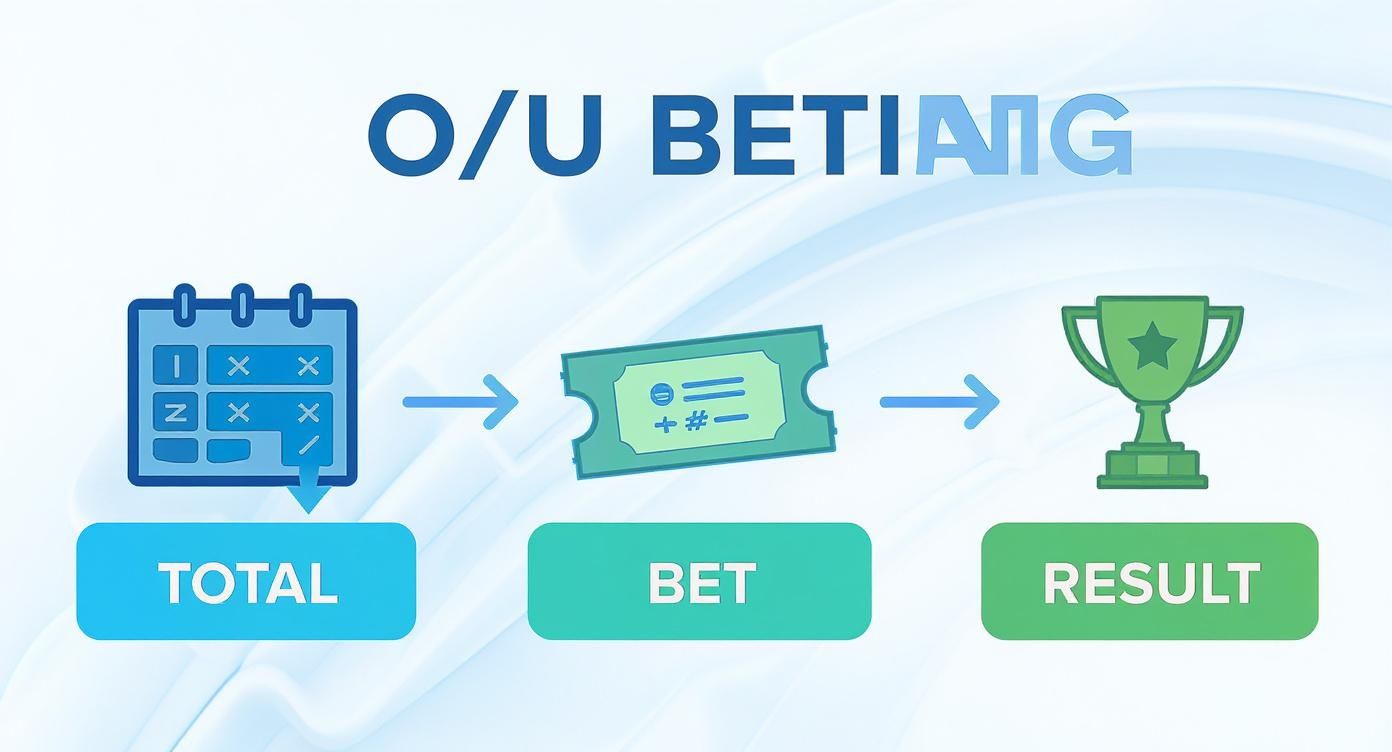
As the graphic shows, it’s a simple three-step flow: the book sets the number, you make your pick, and the final score tells you if you've won or lost.
Calculating Your Potential Payout
Let's put this into practice. Imagine you're browsing MyBookie and see a big NBA matchup between the Lakers and Celtics. The sportsbook has set the game total at 225.5 points, and you think it’s going to be a high-scoring affair. You decide to put $50 on the Over at the standard -110 odds.
Your Bet: $50 on Over 225.5 (-110)
Potential Win: $45.45
Total Payout (if you win): $95.45 (your original $50 stake + $45.45 profit)
The math is simple once you know the formula. Since you're risking $110 to win $100, you can figure out your potential profit by dividing your stake by 1.1. In this case, $50 divided by 1.1 is $45.45. Learning how to read the odds is a core skill for any bettor, and if you want to dive deeper, you can find a complete guide on how to read betting odds to master the different formats.
Knowing exactly what's at stake and what you stand to gain before you click "confirm" is crucial. Once this becomes second nature, you'll be able to quickly size up any line you see on sites from BUSR to Bookmaker.eu and make much smarter wagers.
Putting Totals Betting into Practice
Alright, let's get down to brass tacks. Understanding the theory behind totals is one thing, but applying it to real games is where the fun—and the profit—begins. We're going to move from the abstract to the concrete and walk through exactly how an over/under bet plays out across different sports.
It’s no exaggeration to say that totals are a massive piece of the action. The global sports betting market was valued at a staggering USD 107.4 billion in 2024, and it's still growing. Over/under wagers, especially in football and soccer, are a huge driver of that growth. If you want to dive deeper, you can find more insights on the growth of sports betting markets from this report.
Each sport has its own unique rhythm, and that directly impacts how sportsbooks set their lines and, more importantly, how you should approach betting on them.
NFL Example: A High-Scoring Affair on BetUS
Picture this: the Kansas City Chiefs are facing the Baltimore Ravens. Both teams are famous for their explosive, high-powered offenses. You log into an offshore sportsbook like BetUS and see the game total set at 49.5 points. A high number like that is the oddsmaker's way of saying they expect a shootout.

Now it’s your turn. You start analyzing the matchup. Are both star quarterbacks healthy? Are their top receivers ready to go? Maybe you notice that both teams have key injuries in their defensive backfields. If you feel like the offensive firepower is just too much for the defenses to handle, betting the Over 49.5 is the move.
If the game ends with a final score of 31-24, that’s a total of 55 points. Your 'Over' ticket is a winner.
NBA Example: A Fast-Paced Matchup on Bookmaker.eu
Let's pivot to the hardwood. The Sacramento Kings are visiting the Indiana Pacers, two teams that play at a breakneck speed. A site like Bookmaker.eu has the total set at a whopping 240.5 points.
In the NBA, totals are all about tempo. More possessions mean more chances to score.
- Pace: You check the stats and see both teams are in the top five for possessions per game.
- Offensive Efficiency: They also both rank in the top ten for points scored per possession.
- Defense: Let's just say defense isn't their top priority.
Putting it all together, an Over 240.5 bet looks pretty solid. The sheer volume of shots they'll put up could push the score past the total, even if one team has a cold shooting night.
The Hook is Key: Notice that little .5 at the end of the line? That's called "the hook," and it's crucial. It guarantees a winner and a loser. The final score has to be over or under the number, never exactly on it. This eliminates the possibility of a "push," where all bets are refunded.
Soccer Example: A Low-Scoring Duel on Cosmobet
Finally, let's look at the beautiful game. Imagine a tense Champions League knockout match between Atlético Madrid and Inter Milan on a platform like Cosmobet. The total is set at a tiny 2.5 goals.
Soccer totals are a different beast. In a game with two elite, defensively-minded teams, goals are a precious commodity. Both managers will likely prioritize tactical structure and avoiding mistakes over an all-out attack.
In this kind of cagey matchup, betting the Under 2.5 is a very common play. A 1-0 final or a 1-1 draw means your Under bet cashes. The real challenge is predicting if one of the teams can break through for a second or third goal, making the Over a much riskier proposition.
How Do Sportsbooks Actually Set the Total?
So, where do offshore sportsbooks like BUSR or BetAnything even get these numbers from? It’s easy to think they just pull a number out of thin air, but there’s a serious method to the madness. It's a blend of high-powered math and old-school sports knowledge.
https://www.youtube.com/embed/9o-RLWEtNWo
The process starts with powerful computer models that chew through mountains of historical data. We're talking team scoring trends, defensive stats, pace of play—you name it. This gives the oddsmakers a solid baseline number to work from.
But that's just step one. From there, the real work begins as they tweak and adjust that number to get a line that will, hopefully, draw equal money on both the over and the under.
The Factors That Move the Line
Setting a total is much more art than science. A book like Bet105 isn't just plugging numbers into a spreadsheet; their team is digging into the nitty-gritty of every single matchup to find the right number.
A few key factors carry the most weight in this process:
- Offensive and Defensive Strength: This is the bedrock. How good is a team at scoring, and how good are they at stopping the other team from scoring?
- Pace of Play: Think about the difference between two run-and-gun NBA teams versus two teams that grind it out in the half-court. That difference in pace has a massive impact on the total.
- Key Injuries: A star quarterback being out is the most obvious example, but even losing a key defensive player can shift a total by a few points. Oddsmakers are watching injury reports like hawks.
- Weather: This is a huge one for outdoor sports. A windy, rainy day at Lambeau Field? You can bet that total is going to be lower than if it were a calm, sunny afternoon.
Once you start thinking about these elements, you can see the game the way an oddsmaker does. It helps you spot lines where you think they might have missed something. If you want to dive deeper into the people behind the odds, you can learn more about who creates NFL betting lines in our guide.
Data, Tech, and a Human Touch
Today's oddsmaking is heavily driven by technology. It's no surprise that Europe, which holds over 41.3% of the global sports betting market as of 2024, is at the forefront of this. They've embraced AI-powered tools to sharpen their over/under lines. You can check out the full research about these market trends on IMARC Group for more on that.
At top sites like Bookmaker.eu and MyBookie, oddsmakers use software that simulates a game thousands of times to see what scores pop up most often. The final total they post is often right in the middle of those simulated outcomes.
But even with all that tech, the human element is still crucial. A seasoned oddsmaker knows when to override the computer. They can account for things an algorithm can't, like a heated rivalry, a team's morale after a big win, or a coach’s specific game plan.
It’s this marriage of raw data and expert gut feeling that creates the final total you see on the board. The more you understand this process, the better you’ll get at finding value and making smarter bets.
Proven Strategies for Smarter Totals Betting
Knowing how an over/under bet works is just the first step. The real key to moving from a casual bettor to a sharp one is applying proven strategies that give you a genuine edge over the long haul. It's about shifting from simple guesswork to a more disciplined approach built on solid research, smart analysis, and finding the best possible value.
Let's dive into the core frameworks that profitable bettors use every day.

Why Line Shopping for Totals Matters
One of the simplest yet most powerful habits you can develop is line shopping. Think about it: you wouldn't buy a new TV without comparing prices, so why would you take the first betting line you see?
Holding accounts at multiple offshore sportsbooks like MyBookie, Bovada, and BetOnline allows you to hunt for the most favorable number. That extra half-point might not seem like much, but it can be the difference between cashing a ticket and tearing it up in frustration. Grabbing Over 48 when another book offers 48.5, or getting Under 221.5 when the market is at 221, provides a crucial mathematical advantage.
Here's a quick look at how that tiny difference can completely flip the outcome of your bet.
| Offshore Sportsbook | Game Total Line | Potential Bet Impact |
|---|---|---|
| MyBookie | Over/Under 48.5 | A bet on Under 48.5 is a clear winner. |
| Bovada | Over/Under 48 | The bet is a Push (a tie), and your stake is refunded. |
| BetOnline | Over/Under 47.5 | A bet on Over 47.5 is a clear winner. |
Imagine a game ends with a final score of 28-20, for a total of exactly 48 points. As you can see, the same result can lead to a win, a push, or a loss—all depending on which offshore sportsbook you used. That's the power of line shopping.
Specialize to Find Your Niche
Don't try to be a jack-of-all-trades. Instead of spreading yourself thin across every sport, focus on one area and become an expert. You could specialize in a single sport, or even drill down to a specific conference like the SEC in college football or the Western Conference in the NBA.
This laser focus lets you develop a much deeper understanding of team tendencies, coaching philosophies, and key player matchups. You'll start to spot trends the average oddsmaker might overlook, like how a team's pace of play changes dramatically on the road versus at home. This specialized knowledge is where you find your true edge.
One of the best ways to find value is by looking at where the public money is going. When you see that 80% or more of the bets are on the Over, it often creates an inflated line. Fading the public and taking the Under in these spots can be a highly profitable long-term strategy.
Protect Your Capital with Bankroll Management
Finally, none of these strategies mean a thing without disciplined bankroll management. This is the bedrock of any successful betting career. It’s not glamorous, but it's arguably the most important skill you can learn.
A good rule of thumb is to never risk more than 1-3% of your total bankroll on any single game. This simple rule protects you from going bust during a cold streak and ensures you have the capital to stay in the game long enough for your edge to pay off.
Common Over/Under Betting Mistakes to Avoid
In sports betting, winning is just as much about dodging bad decisions as it is about making smart ones. It's a lesson learned the hard way by many bettors, especially newcomers, who fall into common traps that can drain a bankroll in a hurry. Knowing what these pitfalls are is the first step toward building habits that last.
One of the biggest mistakes? Letting your heart get in the way of your head. It’s so easy to bet the Over on your favorite team’s game because, well, you want to see them light up the scoreboard. But successful betting demands that you check your team loyalty at the door when you log into offshore sites like MyBookie or Bovada. You have to be objective.
Another classic error is chasing your losses. We’ve all been there. You lose a tough Under bet, and the urge to slam a big wager on the next game's Over to "win it all back" is powerful. That kind of emotional, knee-jerk reaction is a one-way ticket to an empty account and throws disciplined bankroll management right out the window.
Overreacting to Single Pieces of Information
It's easy to get tunnel vision and put way too much weight on a single piece of news. For instance, a bettor might see a forecast for high winds in an NFL game and immediately hammer the Under on BetOnline without thinking about anything else.
Sure, weather matters. But it's just one piece of a much larger puzzle. You have to step back and look at the whole picture.
- Team Strengths: What if both teams have dominant running games that aren't really affected by wind?
- Coaching Styles: Are the coaches stubborn and likely to stick to their game plan no matter what the weather is doing?
- Line Value: Has the sportsbook, like Xbet or Sportsbetting.ag, already factored the wind into the line by lowering the total?
A sharp bettor sees the entire field, not just the one flashy headline.
The goal is to build a clear, repeatable process for every single bet you place. That means doing the homework, managing your money smartly, and thinking strategically with every wager, whether you're on BetUS or Bookmaker.eu. Keep emotion out of it and hunt for long-term value.
At the end of the day, avoiding these blunders boils down to one thing: discipline. Sticking to your strategy, even when you're on a losing streak, is what separates the casual bettor from someone who finds consistent success. By recognizing these pitfalls—betting with your heart, overreacting to news, and ignoring your bankroll—you'll build a much stronger foundation for betting totals at any offshore sportsbook, including Cosmobet, BUSR, BetAnything, or Bet105.
Your Over Under Betting Questions Answered
What Happens if the Total Score Lands Exactly on the Number?
You might be wondering what happens if the sportsbook sets the line at, say, 48 points for a football game, and the final score is 28-20. That’s a total of exactly 48, so what now?
This scenario is called a “push.” It’s essentially a tie. When a push happens, your bet is voided, and the sportsbook simply refunds your original stake. No winners, no losers.
To avoid this, you’ll often see totals set with a half-point, like 48.5. This clever trick, commonly used by top offshore sportsbooks like Bovada and MyBookie, guarantees a clear winner and loser, completely eliminating the possibility of a push.
Is It Better to Bet the Over or the Under?
There’s a common misconception that one side is somehow easier to win than the other, but the truth is, neither the Over nor the Under is inherently better. The real value isn't on one side of the bet; it's in finding a number that you believe is inaccurate.
Winning at totals betting comes down to solid research. You need to dig into the team matchups, analyze offensive and defensive stats, and factor in things like weather or injuries. From there, it's all about line shopping at different offshore sites like BetOnline to find the most favorable number for the side you want to back.