You’re probably in one of two spots right now. You’re either staring at a craps layout and thinking it looks like a different language, or you’re on an offshore casino app like MyBookie or BetUS wondering which bets are worth clicking and which ones are a fast way to burn through a deposit.
That confusion is normal. Craps is noisy, fast, and full of bets that look exciting because they pay big when they hit. Most of them are traps. The good news is that a simple craps strategy doesn’t require learning the whole table. It requires learning one core approach, sticking to it, and managing your bankroll like the game can turn against you at any moment.
Top Offshore Sportsbook Bonuses for September 2026

$2,500 Use code - PROMOBUCK2 to get a 125% First Deposit Bonus at the BetNow sportsbook when you deposit with Crypto.


$2,750
200% Crypto Bonus PLUS 10% Gamblers Insurance with a minimum $100 deposit and a maximum of $1,500. Use Code: JOIN200 in the Cashier.

That’s the approach I trust for both live tables and online play at books and casino platforms like MyBookie, BetUS, BetAnything, Xbet, Bet105, Cosmobet, BUSR, Bookmaker.eu, and Heritage Sports. If your goal is to have fun, stay in action longer, and give away less money, this is the cleanest way to play.
Your First Time at the Craps Table
The first time most players walk up to a craps table, they freeze. A dealer is moving chips in three directions at once, players are calling out bets you’ve never heard before, and the felt looks packed with boxes, labels, and center-table action that makes no sense at first glance.
That’s why beginners get into trouble. They think they need to understand everything before they can make one smart bet. They don’t.

What new players usually get wrong
They drift toward the flashy stuff. A stickman calls a proposition bet, somebody cheers a hardway, and now the beginner thinks that must be how regulars win. It isn’t. Regulars who last usually keep most of their money on the table’s lowest-edge bets and let the loud side action belong to someone else.
That same pattern shows up online. On platforms like BetUS or MyBookie, the interface makes every betting area look easy. It’s still the same game. The simple route is still the best route.
Craps gets easier the moment you accept that you can ignore most of the table.
The mindset that actually works
A practical simple craps strategy starts with one decision. You’re not trying to beat randomness. You’re trying to make the best-value wager available, repeat it with discipline, and avoid the bets that gradually drain bankrolls.
For most beginners, that means learning the Pass Line and the Odds bet, then stopping there until those two feel automatic. That’s enough to sit down at a live table, or log into Bookmaker.eu, BUSR, or Heritage Sports and play without second-guessing every roll.
If you can do that, you’re already ahead of a lot of players.
The Only Two Craps Bets You Need to Know
A beginner does not need to read the whole layout. Two bets cover the part of craps that gives you the cleanest, most playable foundation.
Those two bets are the Pass Line and the Odds bet.
Start with the Pass Line
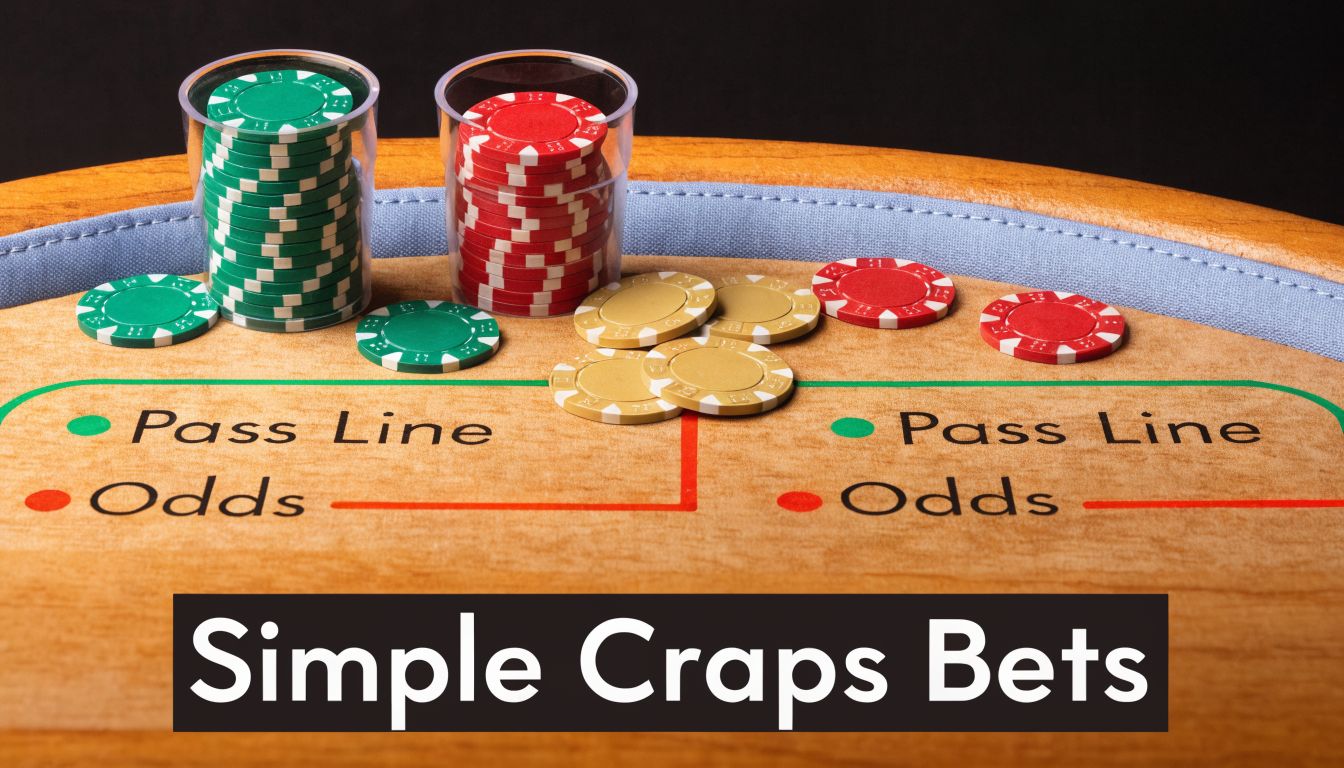
The Pass Line is the bet you make before the shooter’s first roll, called the come-out roll. If you are playing online at MyBookie or BetUS, this is the first betting spot to find and get comfortable with.
The bet works like this:
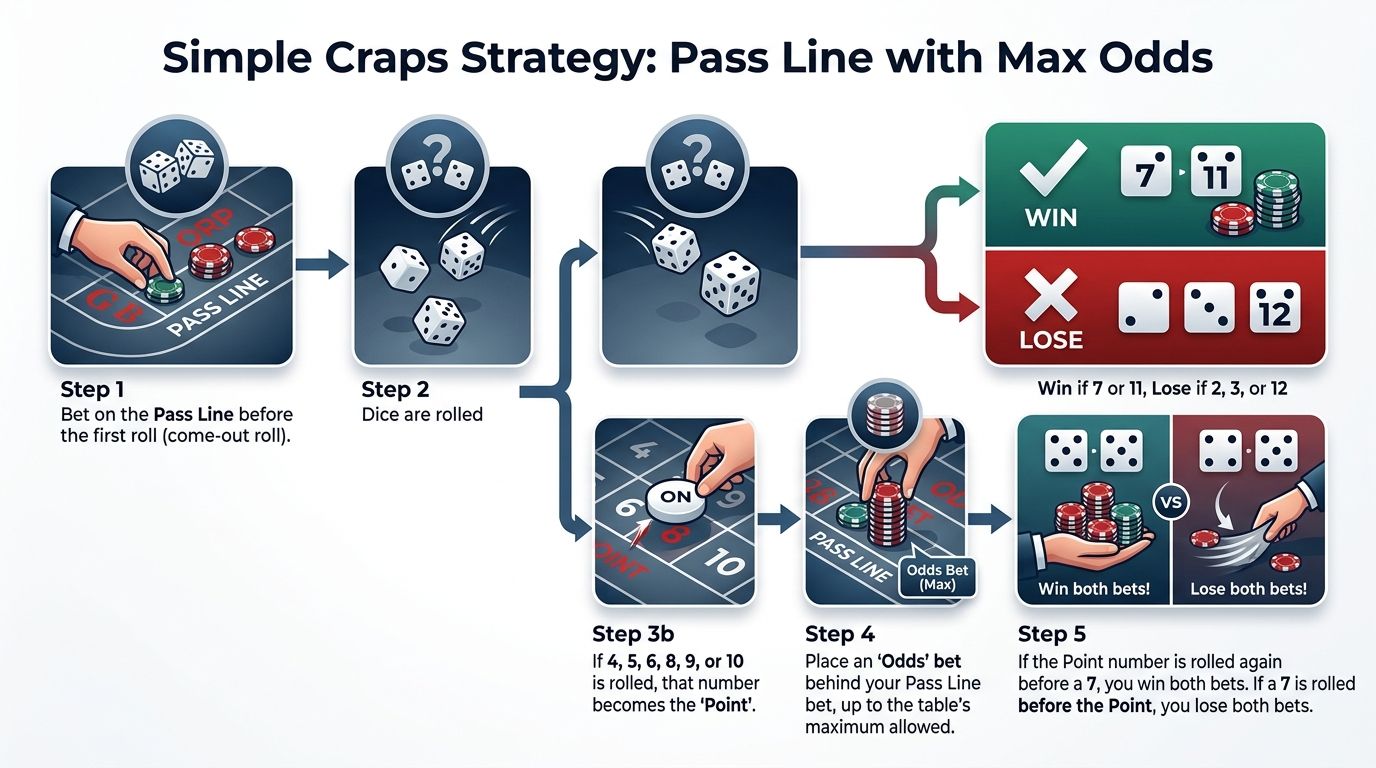
- 7 or 11 on the come-out roll: your Pass Line bet wins.
- 2, 3, or 12 on the come-out roll: your Pass Line bet loses.
- 4, 5, 6, 8, 9, or 10: that number becomes the point.
That structure is why the Pass Line is where I start new players. You are following one simple question. Will the shooter make the point before a 7 shows up?
It is also one of the better bets on the table from a house-edge standpoint, which is the whole reason it belongs in a simple strategy.
Then add the Odds bet
Once a point is set, you can back up your Pass Line wager with an Odds bet. At a live table, the chips go behind your line bet. Online, the interface usually labels it clearly after the point is established.
This is the second bet worth learning because it pays true odds. That means the casino does not build a house edge into the Odds portion itself. The catch is practical, not mathematical. You can only make it after a point is on the board, and table limits decide how much Odds you are allowed to take.
For a beginner, that trade-off is perfect. The Pass Line keeps the game simple. The Odds bet improves the value of your overall action without pushing you into a bunch of side bets.
Why these two bets are enough
If you stick to these two, your decision-making stays clean. Bet the Pass Line. If a point appears, add Odds. Then let the round play out.
That matters even more online, where fast betting and crowded layouts can tempt players into making extra wagers they do not need. On offshore sites like MyBookie and BetUS, the smart move is the same as it is in a casino. Keep your money on the low-edge part of the board and keep enough bankroll in reserve to survive normal swings.
Practical rule: If you know when to place a Pass Line bet and when to add Odds, you know enough to play beginner craps the right way.
Everything else is optional.
The Core Strategy Pass Line with Max Odds
A beginner sits down with $200, clicks into online craps at MyBookie or BetUS, and wants one plan that is easy to follow without bleeding money on bad bets. This is the plan I’d give them every time. Bet the Pass Line. Once a point is set, add Odds. Repeat.
The reason I like Pass Line with 2x Odds is simple. It keeps the decision-making clean while putting more of your action on the part of the game that treats players fairly. Earlier budget analysis and the simulation results below point in the same direction. This is one of the better low-effort, low-edge ways to play craps if your goal is to stretch a beginner bankroll and keep the session fun.
The two-step routine
Bet the Pass Line before the come-out roll.
On a $10 table, start with $10 on the line.If a point is established, add Odds behind it.
For the basic version, use 2x Odds, so a $10 Pass Line bet gets a $20 Odds bet.
That is the whole system.
Core rule: Make the Pass Line bet first, then add as much Odds as your bankroll plan and table limit allow.
Why this strategy holds up
The Pass Line starts with a low house edge. The Odds bet improves the overall value because that portion pays true odds. A math-based explanation in this video reference walks through why the combined edge drops once Odds are added.
That does not mean you should always slam the maximum Odds your casino allows. More Odds lowers the effective house edge, but it also raises the amount of money swinging on each point. For a new player, 2x Odds is the sweet spot. You get a better overall bet without turning a $10 table into a $50-or-$100 exposure every few minutes.
Here’s the video walkthrough if you want to see the idea in action:
What real sessions look like
The best part of this strategy is the math. The hard part is the variance.
A 888casino craps strategy guide based on simulation data tested 200,000 runs on a $10 table with a $200 bankroll over about 144 rolls. For Pass Line with 2x Odds, 888casino reports an average hourly loss of -$5.10, a result range from -$192 to +$118, a 29.4% bust-out rate, and a $174.55 hourly standard deviation.
Those numbers match the actual trade-off. The strategy is mathematically sound, but a short session can still get rough fast. That is why beginners should size bets in units, not vibes. If you need a quick refresher, this guide on what a betting unit means is worth reading before you load a craps bankroll online.
On MyBookie and BetUS, this approach is easy to execute because the interface usually prompts the Odds bet after the point is set. That helps you stay disciplined. The convenience is useful. The swings are still real.
Where players lose the plot
They start with the right base strategy and then start freelancing.
A few lost points, and they toss money on hardways or horn bets. A few quick wins, and they press action they never planned to make. That is how a good beginner strategy turns into a messy session.
Stick to the routine. Pass Line. Add Odds. Let the dice do the rest.
Smart Bankroll Management for Craps Sessions
A low-edge strategy can still wreck a small bankroll if your bet size is too big. That’s the part many beginner guides leave out, and it’s the part that matters most when you’re playing online at Heritage Sports, Xbet, or MyBookie where it’s easy to keep clicking.
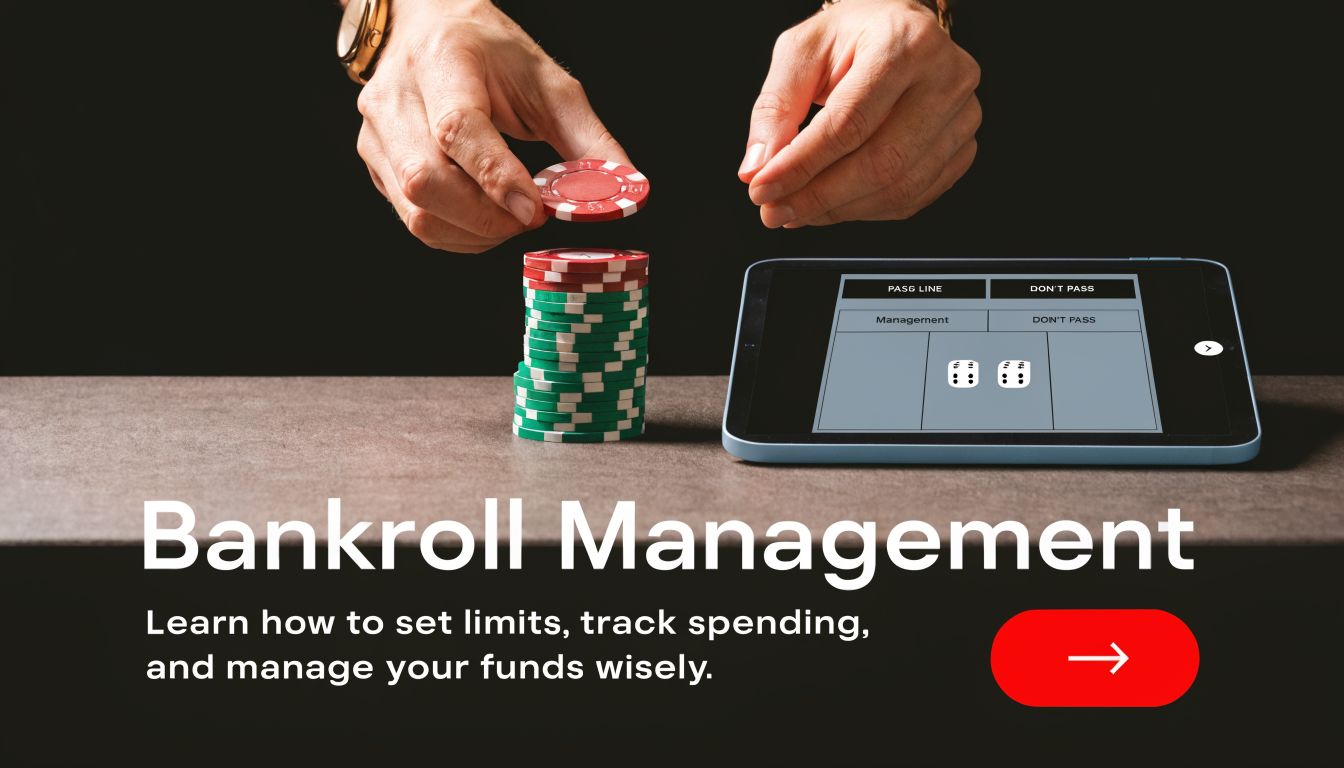
The warning sign is real. Riverwind’s craps strategy guide notes that even with Pass Line with 2x Odds, there’s about a 29% chance of busting a $200 bankroll in a single hour. That’s why bankroll rules aren’t a “nice extra.” They’re the only thing that keeps a good strategy from turning into a bad session.
A workable session plan
I like a simple structure:
- Set a session bankroll first: Decide what amount you can lose without reloading.
- Keep your base bet small: Think in betting units, not dollars. If you need a refresher, this guide to what a betting unit means is useful.
- Account for Odds in advance: Your real exposure isn’t just the Pass Line chip. It’s the line bet plus the Odds you plan to add.
- Stop when your limit is hit: If the bankroll for that session is gone, the session is over.
Rules that keep you in control
A few habits matter more than any betting trick:
- Use repeatable sizing: If your table minimum or online minimum is too high for your bankroll, find a lower-limit game at MyBookie, BUSR, or Bet105 instead of forcing action.
- Decide your exit before the first roll: Pick a win point where you’ll lock it up and a loss point where you’ll stop.
- Don’t chase with side bets: Chasing turns a disciplined session into random gambling fast.
Good bankroll management doesn’t make craps profitable. It makes a volatile game survivable.
That’s the whole job. You’re trying to stay in the game long enough for the low-edge strategy to matter.
Avoid These Sucker Bets and Common Traps
A beginner makes a few clean Pass Line bets, catches one point, then starts poking at the middle of the layout because the payouts look better. That’s the point where a low-edge session usually goes sideways.
Online, the trap is even easier to fall into. BUSR, Bookmaker.eu, and Cosmobet put every prop and center-table bet one click away, so discipline has to be deliberate.
Good bets versus bad temptations
Here’s the split that matters:
| Bet | House Edge |
|---|---|
| Pass Line | 1.41% |
| Don’t Pass | 1.36% |
| Odds bet | 0% |
| Place 6/8 | 1.52% |
| Fire bet | very high |
The first four bets give you a fair shot to stay in action without bleeding your bankroll too fast. The Fire Bet and similar side bets do the opposite. They look exciting, but they eat beginners alive over time. If you want the bigger picture on why these gaps matter, this breakdown of house edge differences in craps bets lays it out clearly.
The trap behind “fun” bets
Most bad craps bets have the same profile. They settle fast, they promise a flashy payout, and they tempt you to add extra money without any plan.
That matters because your simple strategy already has a job. Pass Line gets you on the shooter. Odds gives you the best value on the table once a point is set. Every random hop bet, hardway, horn, or bonus-style side bet pulls money away from that structure and puts it into worse math.
I’ve seen the same mistake in casinos and online. A player stays patient for fifteen minutes, gets a little bored, starts firing one-roll bets, and suddenly the session feels expensive.
The table does plenty of damage on its own. You do not need to help it.
If you want one practical rule, use this one. Skip any bet you can’t explain in ten seconds, including its payout and why it fits your bankroll. For a beginner trying to maximize table time and keep bust risk under control, that rule saves more money than any “system” ever will.
Using This Strategy at Online and Crypto Casinos
You log in for a quick craps session, load $100 in Bitcoin, and suddenly the game moves much faster than a real table. That speed is the whole challenge online. A simple strategy only stays simple if your bet size stays under control.
That is why I like using this approach at offshore sites such as MyBookie and BetUS. You can stick to one routine, avoid table chatter, and get reps without the social pressure that pushes beginners into bad bets.
RNG and live dealer both work
The strategy stays the same online. Start with Pass Line. Add Odds after a point is set. Stop there unless you already know exactly why another bet belongs in your session.
What changes is the pace.
RNG craps is faster, so bankroll mistakes show up faster too. If your base bet is too big, a short cold stretch can burn through a session before you settle in. Live dealer craps usually gives you a better rhythm. You have a few extra seconds to confirm the point, place Odds correctly, and avoid the impulse bets that wreck a beginner’s plan.
For new players, live dealer is often the better training ground. It feels closer to a real table, and the slower tempo makes discipline easier.
Crypto play needs tighter session rules
Crypto deposits make it easy to jump in fast, which is convenient, but that convenience can blur your limits. Set the bankroll before the first roll. Set the base unit before the first roll. Decide how many losses end the session before the first roll.
If you want to compare payment options first, this guide to offshore betting sites that accept Bitcoin is a useful starting point.
Bonuses can also tempt players into overplaying. Low-edge bets like Pass Line with Odds or Don’t Pass with Odds are better for clearing wagering than throwing money at props and one-roll bets, but rollover is still rollover. If the bonus terms force you to risk more than your normal session plan, skip the bonus and protect the bankroll.
Best use case for beginners
Online craps works best as a controlled practice session.
Pick one site. Use one stake level. Keep records for a few sessions so you can see how often normal variance knocks you around. That matters because beginners usually underestimate bust risk. Even with a sound strategy, short bankrolls disappear quickly when the table turns cold and the game is moving every few seconds.
My rule is simple. If the session starts feeling fast, expensive, or noisy, the bets are probably too large.
Used the right way, online and crypto craps are a good fit for this strategy. The layout is the same, the math is the same, and the main job is the same. Stay with the basic bets, keep the unit size modest, and give yourself enough bankroll to survive the swings without turning a fun session into a chase.