You're probably here because you've heard someone say a team “didn't cover” and thought, wait, didn't they win? That confusion is normal. A lot of new bettors watch a game, see the favorite win, then find out spread bettors on that same team still lost.
That's where against the spread, or ATS, comes in. If you want to define against the spread in a way that helps you bet, think of it as betting on the score margin after the sportsbook gives one team a handicap. Offshore books like MyBookie, BetUS, Bookmaker.eu, Heritage Sports, BUSR, BetAnything, Xbet, Bet105, and Cosmobet all build huge parts of their boards around that idea.

$2,750
200% Crypto Bonus PLUS 10% Gamblers Insurance with a minimum $100 deposit and a maximum of $1,500. Use Code: JOIN200 in the Cashier.


$250 + 100 Free Spins
All new players receive $250 in Free Bets and 100 Casino Spins. Join today and enter the promo code WELCOME in the cashier when you deposit $50 or more.

Get a 50% deposit bonus up to $1,000 with the code: CRYPTO1K. Valid on crypto deposits.
What Does Against the Spread Mean in Sports Betting
Open BetUS or MyBookie on a Sunday morning and you'll see something that trips up a lot of new bettors right away. One team can be the better team, win the game, and still burn spread tickets.
That is what against the spread, or ATS, means.
An ATS bet grades a team against the number the sportsbook posts, not against the raw final score by itself. If the favorite is listed at -6.5, that team has to win by 7 or more to cover. If the underdog is +6.5, it can lose by 6 or fewer, or win outright, and your bet still cashes.
A good way to define against the spread is this: you're betting on whether a team beats the sportsbook's margin, not whether it wins the game.
Why sportsbooks use a spread
Books like MyBookie and BetUS use point spreads to turn lopsided matchups into two-way betting markets. Without a spread, a powerhouse facing a weak opponent often gives you a moneyline so expensive that it is barely worth betting. The spread fixes that by spotting the underdog points before kickoff or tipoff.
It works like a head start in a race. The underdog begins with points in its pocket, and the favorite has to make up that gap on the scoreboard.
If you want a quick primer on how sportsbooks display these numbers on the board, this guide to understanding the point spread is a useful reference before you place your first ATS bet.
Practical rule: A team can win the game and still lose your bet.
That one sentence saves beginners a lot of frustration.
Why bettors care about ATS
ATS betting matters because the market prices expectations, not just team quality. A strong public team can be overvalued for weeks, which makes it harder to cover. A mediocre team can become profitable if the number keeps giving it enough room.
That's why experienced offshore bettors check spread prices first at BetUS and MyBookie, then compare them to other books if they want the best number. If one shop hangs -7 and another shows -6.5, that half point can decide whether you win, lose, or push.
ATS also gives you a better read on how a team performs relative to market expectations. That matters a lot more to bettors than a plain win-loss record.
Understanding the Point Spread The Foundation of ATS
Open the NFL board at BetUS or MyBookie and you will see two numbers sitting next to the teams before you ever place a bet. Those numbers are the spread, and they tell you how many points the favorite has to overcome or how many points the underdog gets as a cushion.
The quickest way to read it is this: the minus sign belongs to the favorite, and the plus sign belongs to the underdog.
The spread works like a head start in a race. One team starts behind on your betting slip, even though the game itself still begins 0-0.
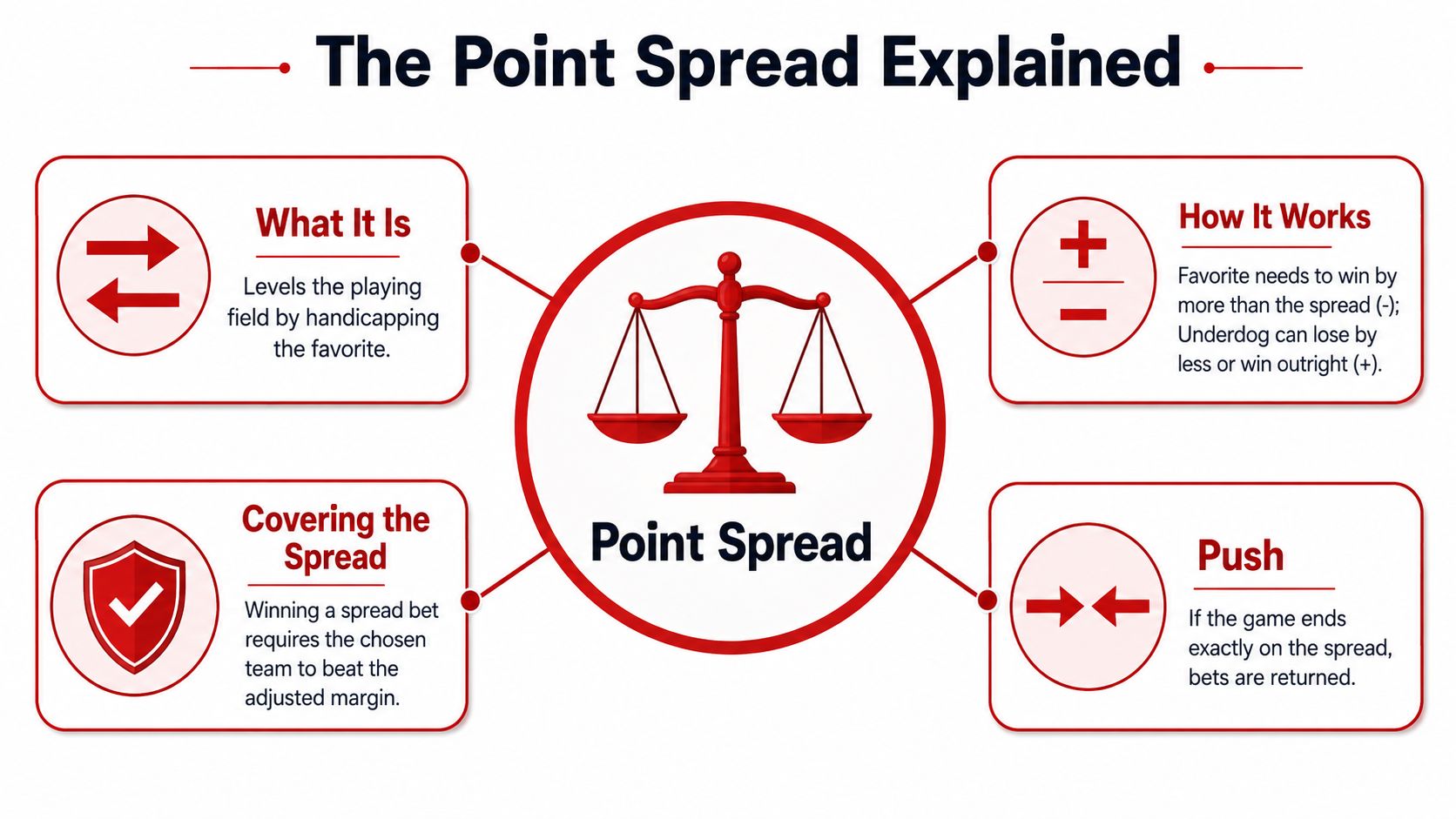
How the minus and plus signs work
Say the board shows:
- Chiefs -7
- Broncos +7
That means the sportsbook is grading the Chiefs as if they start 7 points behind for betting purposes. If you bet Chiefs -7, you need them to win by more than 7. If you bet Broncos +7, you can win even if Denver loses, as long as it stays within 7.
A lot of new bettors get tripped up here because they read the spread like a prediction. It is better to read it like an adjustment. The sportsbook is trying to balance the matchup so both sides become bettable.
If you want a broader walkthrough of how sportsbooks display these markets on the board, this guide to understanding the point spread is a helpful reference.
One example from start to finish
Use the same Chiefs -7 and Broncos +7 line and grade the bet by the final margin, not just by who won the game.
| Bet | Final score | Result |
|---|---|---|
| Chiefs -7 | Chiefs win by more than 7 | Cover |
| Chiefs -7 | Chiefs win by exactly 7 | Push |
| Chiefs -7 | Chiefs win by fewer than 7 or lose | No cover |
| Broncos +7 | Broncos lose by fewer than 7 | Cover |
| Broncos +7 | Broncos lose by exactly 7 | Push |
| Broncos +7 | Broncos lose by more than 7 | No cover |
That exact-hit result matters. If the favorite wins 27-20, the game landed right on 7, so the bet is a push and your stake is returned.
The spread measures whether a team beat the market's expectation by enough points.
Why this matters on offshore sportsbooks
On MyBookie and BetUS, the spread is usually the fastest market to compare because the number is clear and the price sits right next to it. If MyBookie has a favorite at -7 and BetUS hangs -6.5, those are not the same bet. That half point can turn a push into a win, or a loss into a push.
That is why experienced bettors do not just pick the better team. They shop the number first, then decide whether the price makes sense.
What about the juice
You will also see a price next to the spread, often something like -110 on both sides. That is the juice, also called the vig.
The spread tells you the margin your team has to beat. The juice tells you what the sportsbook is charging for the bet.
You do not need pricing theory to get started. You just need to read the board cleanly. On sites like BetUS and MyBookie, that means checking two things every time: the spread number and the price attached to it.
How to Bet Against the Spread with Real Examples
The best way to learn ATS is to read the board the way it appears on an actual sportsbook and then walk through what different final scores would mean.
On sites like MyBookie and Xbet, the spread market is usually placed right next to the moneyline and total. Once you know where to look, it becomes the easiest market on the screen to read.
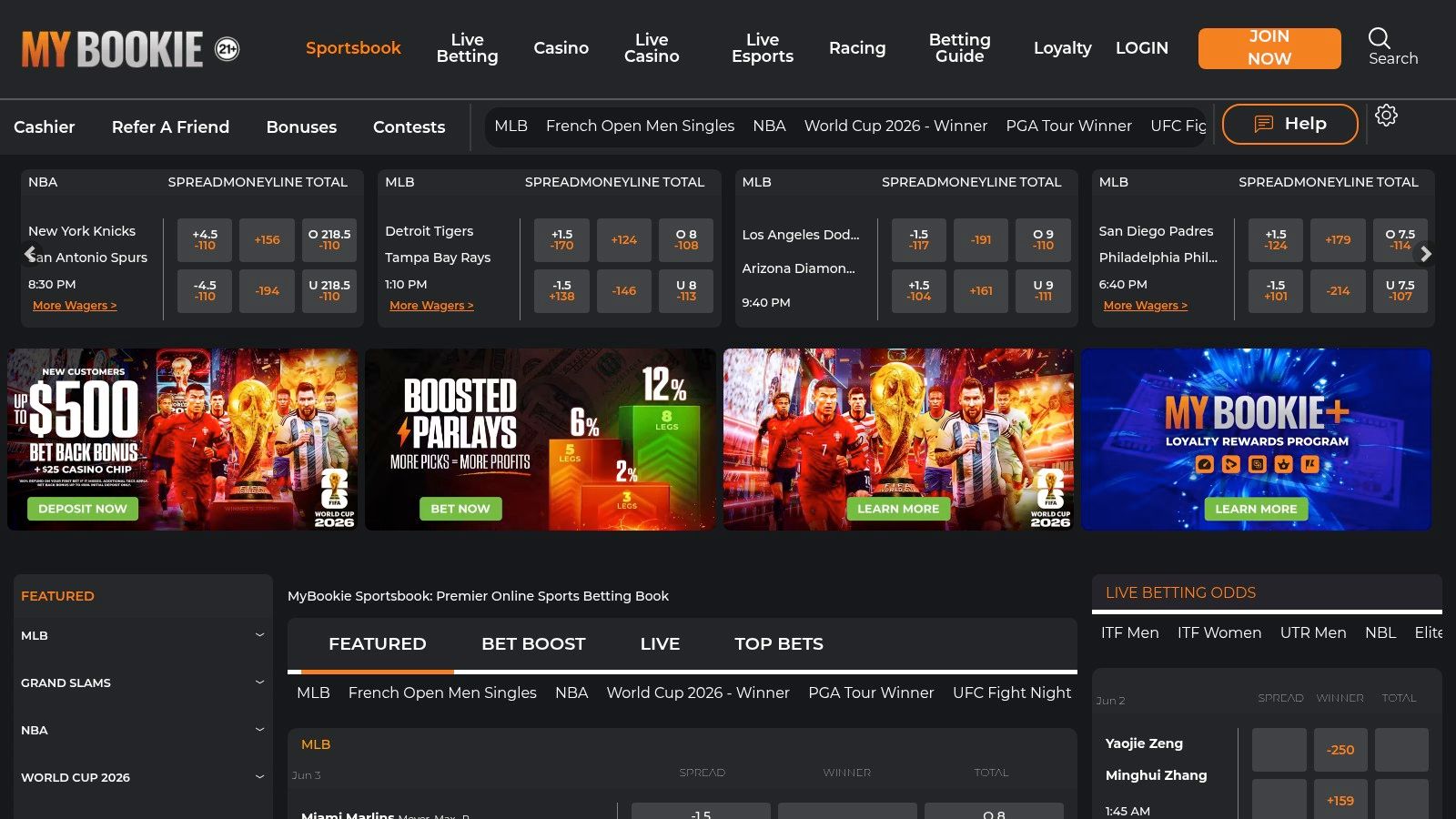
NFL example on MyBookie
Say you open MyBookie and see a football line like this:
- Favorite -7
- Underdog +7
You click the favorite because you think that team is clearly better. Fine. But what exactly are you betting?
You're saying the favorite won't just win. You're saying it will win by more than 7.
Here's how that plays out:
Favorite wins big
If the favorite wins by more than 7, your ATS bet cashes.Favorite wins by exactly 7
That's a push. Your stake comes back.Favorite wins narrowly
If the favorite wins but by fewer than 7, your bet loses even though your team won the game.
That third outcome is where beginners get burned. They handicap the winner correctly, but they handicap the margin poorly.
Underdog example on the same board
Now flip the ticket and take the underdog at +7.
You don't need the underdog to win the game. You need that team to stay within the number.
That means:
- Underdog wins outright and you cash.
- Underdog loses by fewer than 7 and you still cash.
- Underdog loses by exactly 7 and the bet pushes.
- Underdog gets blown out by more than 7 and the ticket loses.
A lot of profitable spread betting starts with one question: is this underdog better than the market is giving it credit for?
NBA example on Xbet
Basketball spreads work the same way, but the pace of scoring makes the experience feel different. On Xbet, you might see a game where one side is favored and the other side gets points, just like football.
The read is identical:
| Team side | What you need |
|---|---|
| Favorite with minus points | Win by more than the spread |
| Underdog with plus points | Lose by less than the spread or win outright |
What changes in basketball is how often late-game fouling, bench rotations, and garbage-time baskets affect the final margin. A team can dominate most of the night, then fail to cover because the closing minutes got sloppy.
That's why sharp bettors don't just ask who's better. They ask how likely the game script is to create separation.
Here's a quick visual walkthrough before you place your first spread ticket:
What a first ATS bet should look like
If you're new and using MyBookie, Xbet, or BetUS, keep your first spread bet simple.
- Pick one game only. Don't stack parlays before you understand single-game ATS results.
- Read the sign carefully. Minus means favorite. Plus means underdog.
- Write down the exact number. A spread ticket lives and dies on the number.
- Know the push condition. If the game lands exactly on the spread, you're usually getting a refund.
If you can explain your ticket in one sentence before kickoff, you probably understand it. If you can't, don't bet it yet.
Moneyline vs Spread Distinctions Every Bettor Must Know
A moneyline bet and a spread bet can be on the same team, in the same game, and still mean very different things.
A moneyline bet is simple. You're picking the team to win outright. A spread bet asks whether that team can cover the handicap.
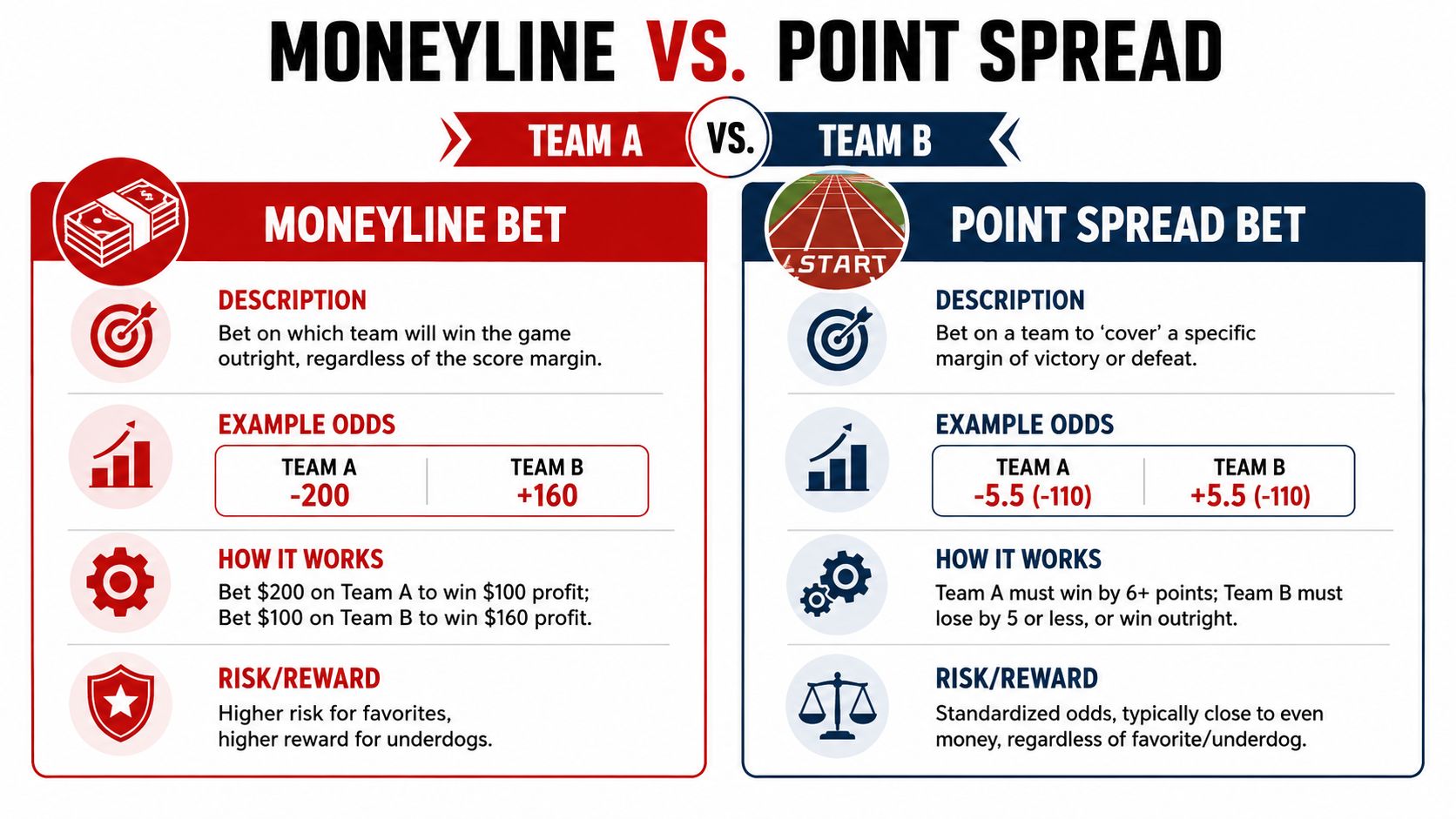
What you're actually betting on
The cleanest distinction is this:
- Moneyline = who wins the game
- Spread = how the final margin compares to the line
That matches how SportsBettingDime explains ATS wagering. Their guide describes ATS as a wager on a team's margin of victory relative to the sportsbook's handicap, not just on which team wins outright.
If you need a separate beginner explainer on the straight-winner market, this guide to what is the money line in betting is useful alongside ATS boards.
Side by side example
Use one game and compare both bet types:
| Bet type | You need | What can go wrong |
|---|---|---|
| Moneyline on favorite | Favorite wins | Favorite loses |
| Spread on favorite | Favorite wins by more than the spread | Favorite wins, but not by enough |
| Moneyline on underdog | Underdog wins outright | Underdog loses |
| Spread on underdog | Underdog stays within the number or wins | Underdog loses by too much |
That's why a bettor at BetUS might like the underdog on the spread but avoid the underdog moneyline. Those are two different opinions.
When each one makes sense
There isn't one “better” market. It depends on your read.
Choose the moneyline when you have a strong opinion on the outright winner and don't want the margin involved. Choose the spread when your edge is tied to competitiveness, game flow, or an inflated number on the favorite.
A spread bet lets you be right about the game without being right about the winner.
You'll also hear the term straight bet. Usually that just means a single wager on one market, often one ATS side, instead of a parlay or teaser.
Using ATS Records to Make Smarter Wagers
Spread betting becomes more compelling. Once you stop looking only at final wins and losses, you can judge whether a team regularly beats market expectations or falls short of them.
That's what an ATS record is for. It tracks covers, not trophies.

Why win-loss records can mislead you
A team can look strong in the standings and still be a bad ATS bet because the market keeps pricing it too aggressively. Another team can have a mediocre season but still reward bettors because it hangs around in games and covers.
That's the logic behind ATS analysis. As noted earlier, ATS records separate a team's betting performance from its straight-up record. That helps when you're comparing public perception to actual market results on books like Bookmaker.eu and Heritage Sports.
What sharp bettors actually watch
Experienced bettors don't stop at a team's cover history. They also watch how the number moves and where the market seems to be leaning.
A practical checklist looks like this:
- Opening line. The first spread posted can tell you how the book framed the matchup.
- Current line. If the number moves, the market may be reacting to news, matchup opinion, or betting pressure.
- Key numbers. In football especially, small changes in spread matter because margins land on certain numbers more often than others.
- Public narrative. Popular teams often attract casual action, which can affect the price.
- Shop comparison. Serious bettors compare Bookmaker.eu, BetUS, BUSR, and MyBookie instead of betting the first number they see.
How to use ATS records without overrating them
ATS records are useful, but they're not magic. A cover streak doesn't guarantee anything in the next game. The line adjusts, the market reacts, and yesterday's value can disappear fast.
Use ATS records as a clue, not a command.
- If a strong team keeps failing to cover, ask whether the market is overpricing its brand name.
- If an ugly team keeps covering, ask whether it's more competitive than casual bettors think.
- If a line moves away from your number, decide whether you still like the bet at the new price.
Good ATS betting is less about predicting the scoreboard perfectly and more about deciding whether the line is fair.
That mindset is why sharp players watch offshore boards closely. They're not trying to prove which team is “better” in a barroom debate. They're trying to decide whether the spread already reflects that opinion.
Top Offshore Sportsbooks for Spread Betting
If you're going to bet ATS regularly, the sportsbook matters almost as much as the pick. You want a clean board, reliable spread markets, and enough variety to compare numbers before you lock in a side.
For broad comparisons, this guide to the best offshore sportsbooks for US players is a useful starting point.
Strong options for ATS bettors
MyBookie is a natural fit for beginners because the spread board is easy to scan and the sportsbook covers major leagues well. If you're learning how to define against the spread in practical terms, MyBookie makes it easy to see favorite, underdog, and line price in one view.
BetUS is a go-to option if you want a deep market menu and a familiar layout for NFL, NBA, and college action. It's one of the first offshore books many bettors check when comparing spreads across the board.
Bookmaker.eu appeals to line shoppers who care about market shape and early numbers. Bettors who follow movement closely often keep Bookmaker.eu open beside BUSR, Heritage Sports, BetAnything, Xbet, Bet105, and Cosmobet to compare where the best spread price sits.
A simple approach works best:
- Use MyBookie if you want an easy first ATS experience.
- Check BetUS when you want a broad menu and solid game coverage.
- Add Bookmaker.eu if you care about comparing sharper market numbers.
If a site offers a promo code, read the bonus terms before depositing. A code can be useful, but only if rollover rules and payout methods fit how you bet.
If you want a cleaner way to compare offshore books before placing your next ATS wager, USASportsbookList is a solid place to review sportsbook options, bonuses, features, and betting resources in one spot.