If you've ever fired up an offshore sportsbook app and felt a little lost looking at anything beyond just picking a winner, you're not alone. The run line is the perfect next step for anyone looking to add a layer of strategy without getting bogged down in complexity.
So, let's cut to the chase: what is the run line in baseball? Think of it as baseball’s version of a point spread, almost always set at 1.5 runs. Its job is to level the playing field between a heavy favorite and an underdog, turning a potential blowout into a much more interesting bet.
Decoding the Run Line in Baseball
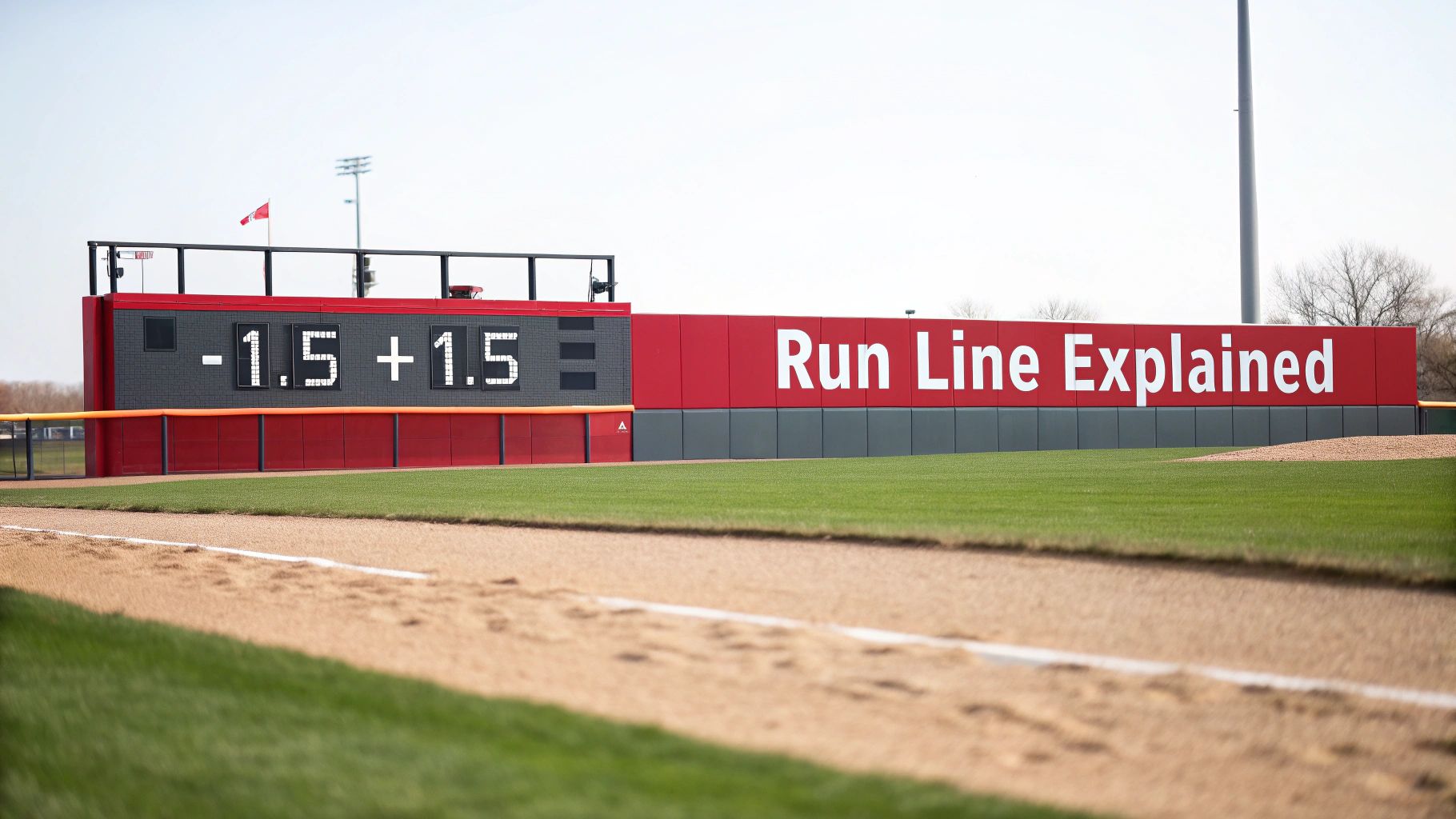
The run line introduces a fixed handicap to every single game. For the favorite, it subtracts 1.5 runs from their final score. For the underdog, it adds 1.5 runs. This completely changes how you have to look at the matchup.
It's no longer just about who wins, but how they win. This simple shift is what separates casual bettors from sharp minds who find value on sites like MyBookie and BetUS. Suddenly, a lopsided game on the moneyline can offer some seriously tempting odds.
For a deeper dive into how the public is betting on these games, you can check out some great resources like these MLB public betting trends on sportsbettingdime.com.
Two Sides of the Same Bet
Every run line wager has two parts, and getting a handle on them is key. While the 1.5 number rarely changes, the odds attached to it will move based on the matchup.
Here’s the breakdown:
- The Favorite (-1.5): This team is "giving" 1.5 runs. For your bet to cash, they have to win the game by 2 or more runs. A one-run win just won't cut it.
- The Underdog (+1.5): This team is "getting" 1.5 runs. Your bet is a winner if they win the game outright OR if they lose by only 1 run.
To put it simply, here’s how your bet cashes depending on which side you take.
How a Run Line Bet Wins
| Your Bet | Run Line | How Your Bet Cashes |
|---|---|---|
| The Favorite | -1.5 | Your team must win by 2 or more runs. |
| The Underdog | +1.5 | Your team must win the game OR lose by only 1 run. |
As you can see, the underdog gets a nice cushion, which is why betting the +1.5 run line is a popular strategy in what's expected to be a tight game.
This simple mechanic is what experienced bettors on platforms like Bookmaker.eu use to find an edge. You're not just picking a winner; you're predicting the flow and final margin of the game itself.
The run line transforms a lopsided matchup into a strategic puzzle. It forces you to look beyond the win-loss column and analyze a team’s potential for a dominant victory or a close defeat.
Placing Your First Run Line Bet on Offshore Sportsbooks
Alright, let's put this theory into practice. It's actually pretty simple once you know what you’re looking for.
When you hop onto an offshore sportsbook like Xbet or Bet105, you'll head straight to the MLB or baseball section. For any given game, the book will lay out three main betting options right away: the run line, the moneyline, and the total (over/under). We’re zeroing in on the run line here—it's the bet that really changes the game by leveling the playing field.

Take a look at that classic New York Yankees vs. Boston Red Sox matchup on the screen. You can see the -1.5 and +1.5 spreads clear as day, each with its own American odds attached. This is the heart of run line betting.
Breaking Down the Odds
Let’s use that Yankees vs. Red Sox example to see why the run line is such a strategic move for bettors.
- New York Yankees (Favorite): Their run line is set at -1.5 with +160 odds. To cash this ticket, the Yankees have to win by 2 or more runs. A winning $100 bet here would net you a $160 profit—a handsome reward for taking on the extra risk compared to just picking them to win.
- Boston Red Sox (Underdog): Their run line is +1.5 at -180 odds. This bet is a winner if the Red Sox either win the game outright or lose by just a single run. Here, you'd need to risk $180 to win $100 because you’re getting that 1.5-run cushion.
See what happened there? The run line took a heavy favorite—who probably had terrible moneyline odds—and turned them into an attractive plus-money bet. This is the kind of value that sharp bettors live for.
The run line transforms a favorite with poor moneyline odds into an attractive plus-money opportunity. It asks a more specific question: can the better team win decisively?
Remember, these odds aren't set in stone. They'll move based on how much money is coming in, last-minute lineup changes, or even a shift in the weather forecast. This is exactly why shopping around for the best lines is so important. Some offshore books like Heritage Sports are known for having sharper odds than others.
To explore your options, check out our guide on the best MLB betting sites to see how different platforms compare. Finding even a small edge in the odds can make a huge difference to your bottom line.
Run Line vs. Moneyline Betting Clarified
To get anywhere in baseball betting, you have to know which tool to pull out of the toolbox and when. The two most common wagers you'll see are the run line and the moneyline. They might look similar at first glance, but they’re built for completely different strategic situations.
Think of it this way: a moneyline bet is as simple as it gets. You're just picking which team you think will win the game. That's it. The run line, on the other hand, is a bet on the margin of victory. This is the key distinction that separates a casual bet from a sharp, calculated wager at offshore sportsbooks like Heritage Sports or BUSR.
The Core Difference: Why Both Bets Exist
The moneyline is your go-to when you have a strong feeling about an outright winner, especially if you think an underdog is being undervalued and has a real shot to win. If you want a full breakdown of the nuts and bolts, check out our guide on what moneyline betting is.
But the run line is designed to answer a totally different question. It’s not just about who will win, but how they'll win. Will the favorite absolutely crush the other team, or will the underdog manage to keep the game tight? This becomes incredibly important when you're looking at games with a heavy favorite, where the moneyline payout is so small it's barely worth your time.
The moneyline asks who will win. The run line asks how they will win. This subtle shift unlocks entirely new betting value, especially in seemingly one-sided matchups.
Let's look at a table to really drive this home. Imagine the powerhouse Los Angeles Dodgers are playing the Arizona Diamondbacks, and the odds are stacked heavily in L.A.'s favor on a site like MyBookie.
Comparing Key Bet Types: Moneyline vs. Run Line
This table breaks down how a bettor might approach this matchup using either a moneyline or a run line wager, highlighting the completely different goals and outcomes for each.
| Betting Type | What You Are Betting On | When It Makes Sense | Example Scenario |
|---|---|---|---|
| Moneyline | The team will win the game, even if it's just by one run. | You're confident in a team winning, and you don't care about the final score. | Betting the Dodgers -250. They just need to win. Simple. |
| Run Line | The favorite will win by a specific margin, or the underdog will keep the game close. | You want better odds on a heavy favorite or a safety net for an underdog. | Betting Dodgers -1.5 or Diamondbacks +1.5. |
Here’s where it gets interesting.
- Betting the Dodgers moneyline at -250 means you have to risk $250 just to win $100. That's a pretty terrible return on your money.
- But if you bet the Dodgers run line at -1.5 (+120), you're now getting plus-money odds. For your bet to cash, the Dodgers just need to win by 2 or more runs—something a heavy favorite is expected to do anyway.
- On the flip side, betting the Diamondbacks +1.5 (-140) gives you a cushion. Your bet wins if they pull off the upset and win outright, OR if they lose by just one run.
As you can see, the run line completely changes the game. It can turn a low-value bet on a favorite into a profitable one and give your underdog pick a fighting chance to cash even in a loss. It's an essential tool for finding real value in the daily baseball odds.
Calculating Run Line Payouts with Real Examples
Alright, let's get down to the brass tacks: how much can you actually win? Understanding your potential payout is everything in sports betting, so let’s walk through a couple of real-world scenarios you’d see on any given Tuesday.
Think of it like this: your first decision is whether you just want to pick a winner (that's the moneyline) or if you want to bet on how much they'll win by. That's where the run line comes in.
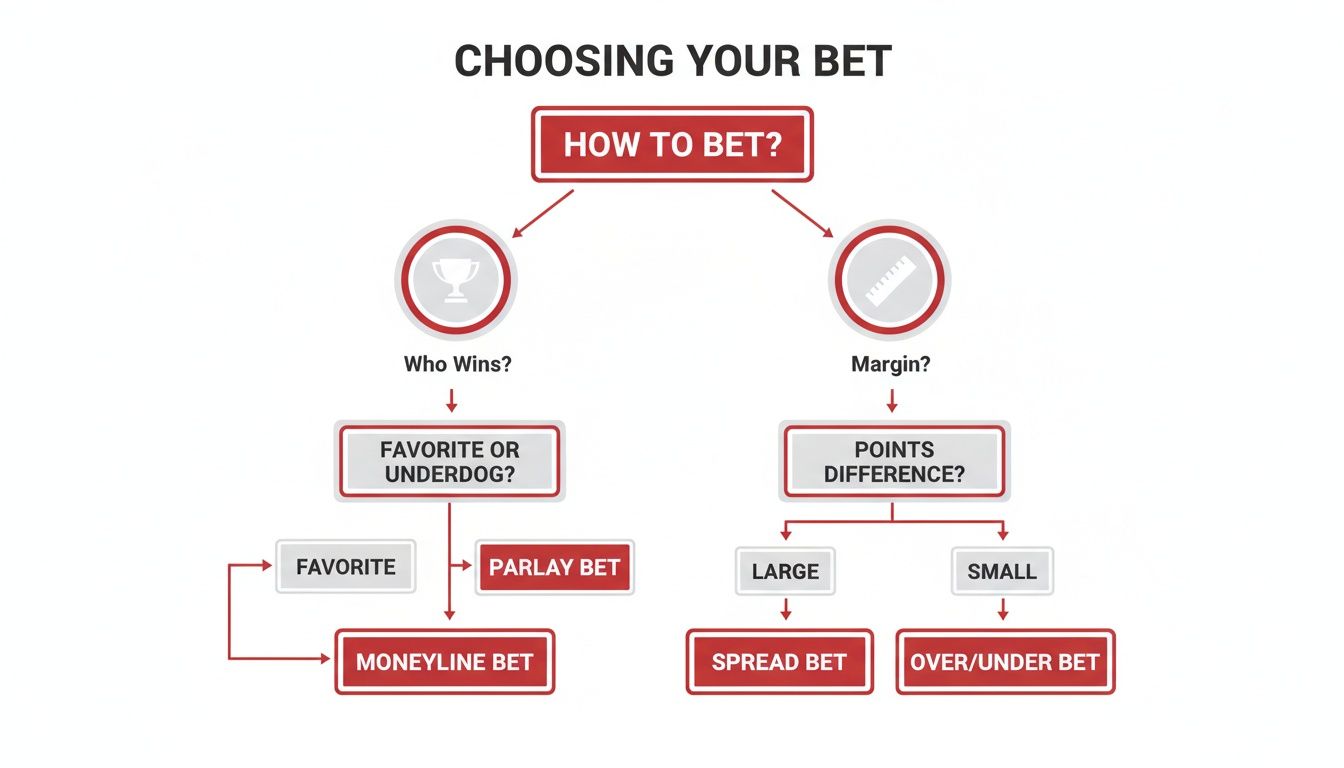
This flowchart nails the core strategic choice. The run line is your play when the margin of victory matters more than just the simple win.
Favorite Payout Example (-1.5)
Picture this: the Los Angeles Dodgers are heavy favorites over the Miami Marlins. The run line is sitting at Dodgers -1.5 (+150).
- You decide to lay down $100 on the Dodgers -1.5.
- For your bet to hit, the Dodgers need to win the game by 2 runs or more. A 5-3 win works. A 2-1 win does not.
- Let's say they crush it and win 5-2. Boom, you won! You get your $100 stake back plus $150 in profit. Your total payout is $250.
This is why bettors love the run line for big favorites. Those "plus money" odds (like +150) offer a much sweeter return than you'd ever get on a lopsided moneyline.
Underdog Payout Example (+1.5)
Now, let's flip the script and look at the underdog. The Marlins are listed at +1.5 (-170).
- You bet $170 on the Marlins +1.5.
- Here’s the beauty of it: your bet wins if the Marlins win the game outright OR if they lose by just a single run.
- The final score is Dodgers 4, Marlins 3. Even though they lost the game, your bet is a winner! You get your $170 stake back, plus $100 in profit.
You’re essentially paying a bit of a premium (the -170 odds) to get that 1.5-run cushion. It's a classic trade-off. In fact, understanding what the risk-reward ratio means in trading is a concept that applies perfectly here. Every bet you make, from deciphering a sports betting ticket to calculating these payouts, is all about that balance.
The run line forces a clear decision: do you want to take on more risk for a bigger payout on the favorite, or would you rather pay for an insurance policy on the underdog? Getting this balance right is how you find real value.
Winning Strategies for Run Line Betting
Alright, now that you know what a run line is, let's get into the good stuff: how to actually win these bets. If there's one thing to take away, it's this—favorites win games all the time, but they fail to cover the -1.5 spread a lot. That little gap is where sharp bettors make their money.
The historical data doesn't lie. Look at MLB numbers from the last few seasons, and you’ll see why experienced bettors at offshore sportsbooks like MyBookie live by the "against the spread" stats. Favorites only manage to cover that -1.5 run line somewhere between 45-48% of the time. Over a grueling 162-game season, betting on +1.5 underdogs simply presents more consistent value. You can even discover more insights on thisdayinbaseball.com to see how these trends influence today's odds.
What does this tell us? In a sport where one-run games are incredibly common, taking the underdog with that crucial +1.5 run cushion is often the smarter long-term play.
Analyzing Matchups Like a Pro
To find those winning run line bets, you have to go deeper than just who has the better record. It’s all about the specific matchup. A winning approach means breaking down the key elements of the game.
Here are the factors I always focus on:
- Starting Pitcher Dominance: Is a true ace on the mound for one side? A pitcher capable of shutting down an entire lineup can make it tough for either team to score much, which naturally favors the +1.5 underdog.
- Bullpen Reliability: A team's bullpen is a run line bettor's best friend or worst enemy. A shaky relief corps can blow a two-run lead in the blink of an eye, killing your -1.5 ticket. On the flip side, a team with lockdown relievers is much more likely to hold a lead and secure the cover.
- Offensive Firepower: Does the favorite's lineup consistently put up crooked numbers, or do they grind out 2-1 victories? You want to back powerful, explosive offenses when you're laying the -1.5 runs.
- Ballpark Dimensions: The stadium matters. A game in a massive, pitcher-friendly park is more likely to be a low-scoring duel. That kind of environment is perfect for the +1.5 underdog, since every run is precious.
Think about it: you've got a Cy Young contender on the mound for an underdog team, and they're playing in a pitcher's park. The odds of a tight, one-run game just went through the roof. That +1.5 run line at a sportsbook like Cosmobet suddenly looks like a fantastic wager.
Winning at run line betting isn't just about picking the winner. It's about predicting the script of the game. Is it going to be a blowout or a nail-biter? If you can answer that question, you'll find plenty of value on the board.
Answering Your Top Run Line Questions
Even after you get the hang of the run line, some tricky situations can pop up and leave you second-guessing your bet. We've all been there. This section tackles the most common questions that arise, giving you clear answers for scenarios you'll definitely run into.
Think of this as your quick-reference guide for those "what if" moments at the sportsbook.
Can the Run Line Be Different From 1.5 Runs?
You bet it can. While -1.5/+1.5 is the standard you'll see front and center, most top offshore sportsbooks like BetAnything and Bookmaker.eu offer what are called "alternate run lines."
These are awesome because they let you tweak the spread to fit your prediction, and you get different odds to go with it. Feeling really confident in a favorite? You could take them at -2.5 for a much bigger potential payday. Or maybe you want to give an underdog an extra cushion? You can buy a run and bet them at +2.5, which lowers your payout but gives you a better shot at winning. Alternate lines offer great flexibility, but remember the standard 1.5 line is always the main event.
Alternate run lines put you in the driver's seat. You can swing for the fences with a -2.5 line or play it safe by buying points for an underdog, tailoring the bet to your exact read on the game.
What Happens If a Starting Pitcher Is Scratched?
This is a huge one, and the answer comes down to a choice you make when placing your bet. When you're at a book like MyBookie or BUSR, you'll typically see two options: "Action" or "Listed Pitcher."
- Listed Pitcher: If you pick this and one of the starters you were banking on gets scratched before throwing a single pitch, your bet is simply voided. You get your money back, no harm, no foul.
- Action: If you choose "Action," your bet is locked in, period. It doesn't matter if there's a last-minute pitching change. This can be a gamble, as the odds you got were based on the original matchup.
It's always smart to double-check your sportsbook's house rules, but choosing "Listed Pitcher" is almost always the safer play if your entire bet is built around a specific pitching duel.
Is It Better to Bet the Run Line Early or Late?
Honestly, there are sharp arguments for both. Jumping on a line early in the week can be a fantastic way to lock in a great price before the public money starts pushing the number. If you spot an overlooked underdog on Monday for a Wednesday game at a site like BetUS, grabbing that +1.5 before everyone else catches on can be a huge win.
On the other hand, patience has its virtues. Waiting until closer to the first pitch gives you a mountain of crucial information. You'll know the confirmed lineups, the final weather forecast, and even who the home plate umpire is—all things that can swing a game. The pros often wait to have every last piece of info, while value hunters might pounce early to snag the best odds.
At USASportsbookList, we provide detailed reviews and comparisons to help you find the perfect offshore sportsbook for your strategy. Explore our expert guides and find the best bonuses by visiting https://usasportsbooklist.com.