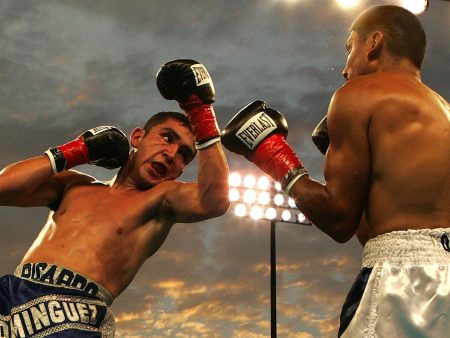
The fighter who finishes strongest does not always finish ahead.
Picture a three-round fight: one fighter presses forward, throws more, and dominates the final minutes. The other lands the cleaner shots in two close early rounds. The crowd may remember the late surge; the scorecards may still favor the quieter performance.

$250 + 100 Free Spins
All new players receive $250 in Free Bets and 100 Casino Spins. Join today and enter the promo code WELCOME in the cashier when you deposit $50 or more.

Get a 50% deposit bonus up to $1,000 with the code: CRYPTO1K. Valid on crypto deposits.


That disconnect comes from judging the contest one round at a time, not as a single unfolding story. Once a round ends, its score stands on its own. A strong third round cannot normally erase two earlier rounds lost 10–9, and visible activity does not automatically outweigh more effective striking or grappling. Even apparent control has limited value if it produces little offense. The result can feel wrong when viewed as a complete fight while remaining consistent with how the individual rounds were scored.
Who judges the fight—and under which rules?
UFC judges are generally appointed or licensed by the athletic commission overseeing the event, rather than selected by the promotion. In locations without an active commission, another regulator—or the UFC under the local arrangement—may supply officials.
Most commissions use some version of the Unified Rules of Mixed Martial Arts, including the 10-point must system and criteria centered on effective striking and grappling. However, adoption is not perfectly uniform. A jurisdiction may use an older rule set, different wording, or distinct procedures, so the event’s governing rules matter.
Three judges usually sit at separate positions around the Octagon. That provides independent perspectives, but each position also has blind spots: the fence, referee, or fighters can obscure an exchange, while a strike may look cleaner from one angle than another. Judges assess the action live and generally cannot rely on broadcast-style replays to reconstruct the round.
After each round, every judge records a score and submits the card to an official. That score is final once submitted; later rounds cannot be used to revise it. The final decision is therefore the sum of several immediate, angle-dependent assessments—not one retrospective judgment of the fight as a whole.
How the round totals add up
A UFC scorecard is built one round at a time. Each judge awards points for the current round without carrying over a fighter’s earlier success. At the final horn, those round scores are simply added together.
For example, in a three-round fight:
- Fighter A wins rounds one and two, 10–9.
- Fighter B wins round three, 10–9.
- The final total is 29–28 for Fighter A.
If Fighter B instead earns a 10–8 in the third, the same card becomes 28–28. This shows why a dominant round can offset two ordinary 10–9 losses.
Most UFC bouts are scheduled for three rounds, giving each fighter a maximum possible total of 30 points before deductions. Championship fights and designated five-round main events allow up to 50 points.
The extra rounds do not receive special weight. Round five counts exactly as much as round one; a fighter simply has more separate contests to win. Each of the three judges calculates an individual final total, and those three cards determine whether the result is unanimous, split, majority, or a draw.
The scoring criteria are not equal
The first and overwhelmingly most important criterion is effective striking and grappling. Judges look for actions that have an immediate or cumulative impact: damaging strikes, submission attempts, advantageous positions that produce offense, and other techniques that move the fight toward a finish.
Only when effective striking and grappling are judged exactly even should effective aggression decide the round. This means advancing while making genuine attempts to land strikes, secure takedowns, or attack submissions. Simply walking forward while absorbing the cleaner offense is not effective aggression.
If both offense and aggression are even, judges may then consider fighting-area control—who dictates where and at what pace the action occurs. It is the narrowest tiebreaker, not a coequal scoring category.
That hierarchy changes how several familiar statistics should be read:
- Pressure matters when it creates effective attacks; forward movement alone does not score.
- Strike volume can be useful, but numerous light connections may lose to fewer blows with greater impact.
- Takedowns are not automatic points. What the takedown achieves—damage, control that enables offense, or submission danger—is more important than the change of position itself.
- Cage position matters mainly when offense and aggression cannot separate the fighters.
Judges therefore are not supposed to total isolated events like a box score. The quality and consequence of the work take priority over activity that merely looks busy.
What effective offense looks like
Effective striking is more than landing the larger number of blows. Judges consider the impact of legal strikes: a clean shot that wobbles an opponent, forces a retreat, disrupts balance, causes visible injury, or meaningfully changes the action can outweigh several light touches. Cumulative effects also matter when repeated strikes steadily reduce an opponent’s movement, defense, or ability to attack.
Effective grappling is judged by what it accomplishes. A submission attempt carries weight when it creates genuine danger—for example, forcing urgent hand-fighting, a difficult escape, or a major defensive reaction. Simply holding a loosely applied choke or limb position is less persuasive.
Other meaningful grappling actions include:
- Takedowns that lead to offense, such as damaging strikes, submission threats, or sustained advancement.
- Productive positional gains, especially when passing guard, taking the back, or reaching mount creates immediate attacking opportunities.
- Reversals and escapes that turn defense into offense rather than merely returning the fighters to neutral.
- Ground strikes that land cleanly and have visible or cumulative effect.
Position by itself is not always enough. A fighter can spend substantial time on top yet produce little offense, while the opponent attacks with damaging strikes or credible submissions from the bottom. Judges must assess the quality and consequences of those actions, not award the round automatically to whoever appears to be controlling the position.
The criteria do not inherently favor striking over grappling, or grappling over striking. Whichever discipline produces the more effective offense should carry the greater weight. A takedown is not automatically worth more than a hard combination, and activity from the bottom is not automatically dismissed.
When a round becomes 10–8 or 10–7
10–9: a clear or narrow win
Most rounds land here. The winner may have edged the effective offense or won clearly, but not by enough to justify taking two points from the opponent.
10–8: a dominant round
Judges assess impact, dominance, and duration together. Serious damage, sustained effective offense, or long control that produces meaningful attacks can support a 10–8; positional control alone usually cannot.
10–7: exceptional one-sidedness
This score is reserved for an overwhelming round approaching the limits of what can occur without a stoppage. It generally requires extreme impact and dominance sustained for much of the round.
10–10: virtually no separation
A tied round is possible when neither fighter establishes an advantage, but judges are discouraged from using it as an easy escape from a close call. Even a small discernible edge should normally produce 10–9.
Deductions and unusual totals
After scoring the action, judges apply any point deduction ordered by the referee. A foul can therefore create scores such as 9–9 or 9–8, which do not describe the round’s competitive margin by themselves.
How three scorecards become an official result
- Unanimous decision
All three judges award the fight to the same competitor. Their round-by-round scoring and final totals can differ; only their agreement on the winner determines this label.
- Split decision
Two judges select one winner and the third selects the opponent—for example, 29–28, 29–28, and 28–29. “Split” describes disagreement among judges, not necessarily a razor-close fight or three closely scored rounds.
- Majority decision
Two judges award the fight to the same competitor while the third scores it a draw. The competitor backed by two cards wins, even though the panel is not unanimous.
- Draws
A unanimous draw means all three cards are level. A majority draw has two level cards and one card naming a winner; a split draw has one card for each competitor and one level card.
- Bet settlement
The announced classification can matter beyond the record. Under UFC method-of-victory settlement rules, a general “win by decision” wager may be treated differently from an exact unanimous-, split-, or majority-decision market, depending on the sportsbook’s terms.
What scorecards do—and do not—measure
Build a scorecard before judging the judges
-
Start every round from zero
Ignore the running fight narrative and previous momentum. Each round is a separate scoring contest.
-
Track effective offense first
Note the most consequential strikes, submission threats, and productive grappling—not merely activity, pressure, or position.
-
Choose the margin
Award 10–9 for an ordinary win and reserve 10–8 or 10–7 for rounds meeting the higher thresholds.
-
Record the score immediately
Write the round and a short reason before the next begins. Do not revise it to fit the eventual result.
-
Compare cards round by round
When official scores appear, identify the disputed rounds and ask whether cageside angles support a defensible alternative before calling the decision a robbery.
Muted commentary can help reduce narrative influence, though it also removes useful context.
Disciplined scoring preserves what happened round by round. A surprising total may deserve criticism, but disagreement alone does not prove an indefensible card.