BetUS
A winning streak can travel farther than the game that produced it.
On Monday, a bettor spots four straight wins beside a player’s name. Friday’s match is on clay; every win came on a quick hard court. The record is convincing, but it does not show how often that player relied on an unreturned serve or a short first-strike rally.
On clay, more serves may come back and points may last longer, giving an opponent more chances to test movement and patience. That does not make the streak meaningless. It makes how those matches were won more useful than the win count alone. Results against strong returners, and the player’s past serving and returning numbers on clay, offer a better check. The betting question is whether the change alters the matchup more than the odds already suggest.
What the surface changes in a point
Surface changes the shape of a point, not just its speed. On a quicker court with a lower bounce, a strong first serve and flat follow-up can win cheap points; a returner has less time to set up. A slower, higher-bouncing court often gives that returner another swing and rewards players who can build a rally rather than finish on the first attack.
Traction matters too. Clay allows a practiced defender to slide into wide balls, while a player uncomfortable stopping and changing direction may struggle despite a powerful forehand. Low bounce can blunt the effect of heavy topspin that troubles opponents on a higher-bouncing court. Rally length offers a useful check: when points extend, does the player maintain depth and patience, or does the error rate rise?
Top Sportsbooks for November 2026
BetUS

BetNow

MyBookie

Bet105

BUSR Sports

Everygame Sports

BetOnline

BetWhale

BetAnything

Xbet

Bovada

Bookmaker
These tendencies belong alongside opponent matchups in a broader tennis betting analysis, not in place of them. An indoor hard court can play differently from an outdoor one; weather, ball choice, and maintenance also affect pace. Recent matches at the venue and evidence of a player adapting between surfaces are more informative than a clay, grass, or hard-court win percentage alone.
How clay changes the contest
Clay often slows the ball after the bounce and sends it higher. That can give returners more time to set their feet, especially against flat serves, while making movement and recovery between shots more important. Damp clay may play heavier; warm, dry courts can still reward an aggressive first strike.
Start with return-game performance, not just the number of aces a player concedes. Does the returner put first serves back in play, win points against second serves, and create break chances against capable servers? Break percentage alone can flatter someone who has faced weak opposition.
Then look at what happens once the return lands. Players who defend wide balls, handle high-bouncing topspin, and reset neutral rallies may gain an edge. Rally tolerance means more than surviving long points: it includes using spin to open an angle, choosing when to attack, and avoiding rushed errors.
A strong serve still matters on clay. It can produce a short return or protect service games without many aces. The better question is whether the server can construct the next shot when the ball comes back.
How grass rewards the first strike
Grass often keeps the ball low and points short, rewarding players who take control early. A strong first serve helps, but the next shot matters too: can the server handle a blocked return that skids through? A compact, quick return can put pressure on an opponent who expects time to set up.
Serve numbers need context. A high ace rate or first-serve points won may reflect weak returners or a fast venue rather than a dependable grass advantage. Second-serve points and results when the return comes back in play can reveal more about the matchup. A player who attacks low balls early may trouble a bigger server despite having less impressive overall return statistics.
Movement deserves equal attention. Grass calls for small adjustment steps, balance on a potentially slick surface, and comfort hitting below knee height. Good clay movement does not guarantee the same confidence here. With so few grass matches each season, one deep run can inflate a player’s surface record. Recent match footage and the opponents behind those results offer useful checks before treating a grass win rate as a firm edge.
Why hard-court records need a closer look
A hard-court record is a useful starting point, but it can combine matches that played quite differently. On a faster court, a strong serve may produce more short points and give the returner less time to set up. A slower court can bring more returns into play, making rallies and second-serve exchanges more important.
Indoor and outdoor results also deserve separate attention. Indoor play removes wind and sun from the equation, which can make serving and ball striking more predictable. Outdoors, those conditions can change during a match. Indoor does not automatically mean fast, though; the court itself still matters.
On tennis sites with broad event coverage, a hard-court filter can establish the baseline, while tournament names help identify closer comparisons. If the upcoming match is on a slow outdoor court, recent results from similar events may say more than a larger record built mostly indoors. Serve and return figures can help test that impression, provided the opponents faced were of comparable quality. When only a few close matches exist, the broader record remains useful—just less precise.
Which surface evidence deserves the most weight
Start with results on the relevant surface, but look past the win–loss record. Hold and break rates, first-serve points won, and return points won show how those results were earned. A strong grass record looks less convincing if the player’s hold rate drops sharply against capable returners.
Next, check whether the pattern appears in recent matches. A change in serve speed, movement, or second-serve success may matter more than results from two seasons ago, particularly after an injury. One recent upset is a clue to investigate, not a new baseline.
Opponent quality puts both the record and the statistics in perspective. Five wins against qualifiers do not carry the same weight as competitive losses against strong players on that surface. Check whether the figures held up across several events, rather than during one favorable draw.
Career history is a useful backstop when the current surface sample is thin. It may show whether an apparent new strength has appeared before, though older results deserve less weight after changes in fitness or playing style. Rankings and Elo ratings provide a broad strength check, not a substitute for examining the surface matchup.
Count the matches behind a striking surface statistic. An injury-affected loss or a short run against weaker opponents can move percentages dramatically.
Put both players on the same court
Surface analysis becomes more useful when each advantage is paired with the opponent’s likely response. A strong server may earn more free points on grass, but that edge matters less if the returner blocks the ball low and handles the next shot well. On clay, a player who builds points with heavy topspin may benefit from the higher bounce—unless the opponent can take that ball early and deny time to recover.
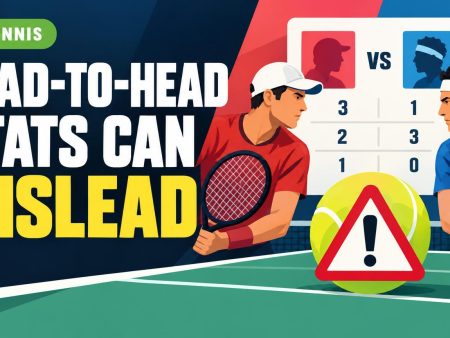
Past meetings need the same context. A 3–0 head-to-head record built entirely on indoor hard courts says little about a first meeting on outdoor clay. Check whether the wins came from patterns likely to survive the change, rather than treating the scoreline as a prediction. This is where head-to-head records can mislead: the familiar names conceal a different set of rallies.
Before weighing the matchup, check conditions that could alter those patterns:
- Recent switch: A player arriving from a hard-court event may have little time to adjust movement and shot selection on clay or grass.
- Weather: Wind can disrupt a precise serve or aggressive first strike; damp conditions may change how quickly the court plays.
- Format: In a best-of-five match, a fast starter’s edge may be less decisive if the opponent has time to settle.
The useful question is not simply who prefers the surface. It is which player’s preferred pattern becomes easier to repeat, and whether the other has a credible way to interrupt it.
Does the price leave room for the edge?
A surface matchup can favor one player without making that player a good bet. The question is whether the odds already reflect the advantage. If a strong clay returner is widely expected to trouble a serve-reliant opponent, the market may have shortened the returner’s price accordingly.
Implied probability turns decimal odds into a useful checkpoint: divide 1 by the odds. A price of 2.00 implies a 50% break-even chance; 1.70 implies about 59%. If the clay returner is priced at 1.70 but the evidence supports only a slight edge, the appealing matchup may not justify the bet. Bookmaker margins also mean the probabilities for both players will usually add up to more than 100%.
The comparison does not require a falsely precise forecast. It does require a reason to think the market has missed something material, such as a recent shift in court conditions or an opponent whose return numbers came mostly against weaker servers. If that reason rests on two grass matches, an injury rumor, or a court-speed assumption that cannot be checked, passing is a sound decision. The surface insight can still be right; the price may offer too little reward for the uncertainty.
-
Check the conditions
Start with the venue, not the surface label: consider court speed, indoor or outdoor play, weather, and the balls if that information is available.
-
Picture the points
Ask whether those conditions are likely to produce quick holds, difficult returns, or longer rallies. That gives the player statistics a purpose.
-
Test each player against the other
Identify the strengths each player can use under those conditions, then look for the opponent’s answer. A strong serve matters less if the returner consistently puts the next shot under pressure.
-
Check the evidence
Favor results from comparable venues and capable opponents. Treat an impressive record cautiously if it comes from a few matches or courts that played differently.
-
Compare the case with the odds
Convert the price to a break-even probability and ask whether the matchup supports a higher chance of winning. If the gap depends on a shaky assumption, pass.
A surface edge matters most when it changes the expected pattern of points and the odds do not appear to account for it. A plausible story alone is not enough: uncertain conditions or thin evidence can make a seemingly attractive price too close to call.
Top Sportsbooks for November 2026
BetUS
BetNow
MyBookie
Bet105
BUSR Sports
Everygame Sports
BetOnline
BetWhale
BetAnything
Xbet
Bovada