You're probably here because you've lived the same cycle most bettors do. You handicap a game, feel good about the side, place the bet, and then lose by a hook, a late foul, or a line move you didn't think mattered. After a while it starts to feel random.
It isn't random, but it's also not forgiving.

$2,500 Use code - PROMOBUCK2 to get a 125% First Deposit Bonus at the BetNow sportsbook when you deposit with Crypto.


$2,750
200% Crypto Bonus PLUS 10% Gamblers Insurance with a minimum $100 deposit and a maximum of $1,500. Use Code: JOIN200 in the Cashier.

If you want to learn how to win sports bets, stop treating betting as a contest of picking winners and start treating it like a pricing market. That shift changes everything. It changes how you look at MyBookie, BetUS, Bookmaker.eu, Heritage Sports, BUSR, Xbet, Bet105, Cosmobet, BetAnything, and every other offshore screen you use. It changes what counts as a good bet. It changes when you pass.
Beyond Luck and Gut Feelings
A lot of bettors can describe a bad beat in perfect detail, but they can't explain why they made the bet in the first place. They liked a quarterback matchup. They trusted a hot team. They had a feeling a total was too low. That style can produce wins for a while, but it rarely survives a serious market.
The market is more informed than it used to be. A 2023 survey from Northwestern's Medill Spiegel Research Center found that 31.7% of respondents engaged in sports gambling, and 71.7% of those sports gamblers also played fantasy sports. That overlap matters because fantasy players tend to think in terms of usage, injuries, matchup splits, and player roles. In other words, the average betting pool now includes more people using numbers, not just instincts.
That's why gut-first betting gets punished. If your edge is “I think this team wants it more,” you're competing against people building projections, tracking injury reports, and comparing numbers across multiple offshore books.
What winning actually looks like
Winning bettors don't need to be right about every game. They need to be right about price.
That sounds small, but it's the whole job. The sharpest bettors I know don't ask, “Who wins?” first. They ask, “Is this number off?” A favorite can win comfortably and still have been a bad bet if you laid a bad price. An underdog can lose and still have been the right wager if the number was too high.
Betting gets cleaner when you stop trying to predict the sports universe and start trying to identify bad prices.
That's also why the best beginner mindset is the same one used in any disciplined market activity: rely on evidence, process, and repeatable decision rules. If you need a quick reset on that approach, this piece on using data, not gut feelings makes the core idea clear.
The mindset shift that matters
When people ask how to win sports bets, they usually want a shortcut. A secret system. A trend list. A lock.
What works is less exciting and much more profitable over time:
- Build your own opinion before you bet
- Compare that opinion to the market
- Take the best number available
- Pass when the edge isn't there
- Track what's real and cut what isn't
That's the playbook. Everything else in this article builds on it.
Mastering Your Money and Mindset
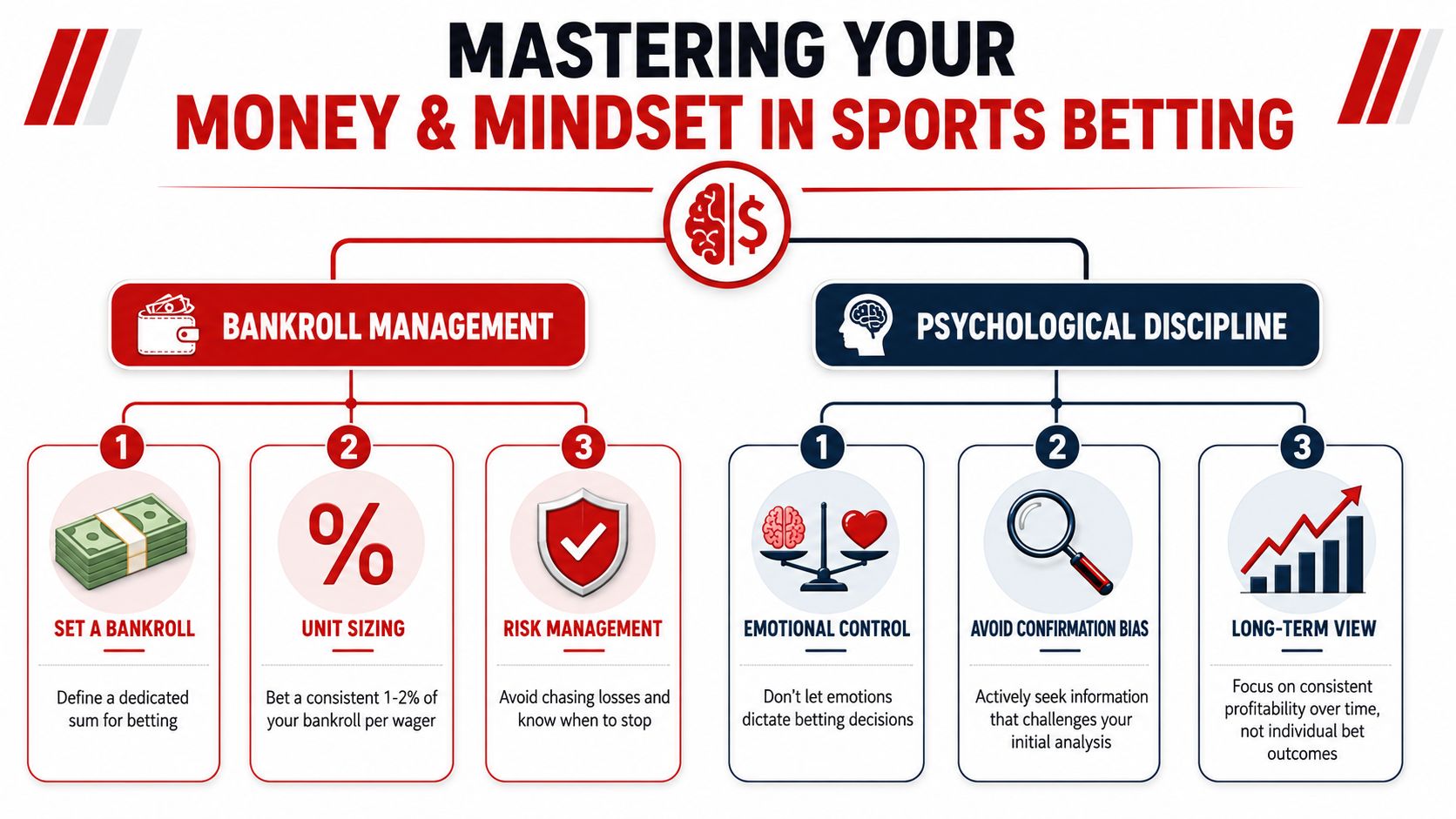
Most betting advice fails because it starts with picks. Serious betting starts with bankroll control. If your money management is sloppy, a good read won't save you. If your emotions run the account, your edge won't survive.
Build rules before you place bets
Start with a bankroll that exists only for betting. Not rent money. Not the card you use for groceries. A separate pool.
Then assign a unit. Your unit is your standard wager size. Some bettors use a fixed dollar amount. Others use a percentage-based model. Either can work if you're consistent, but the key is that your stake comes from your system, not your mood.
I like unit-based thinking because it stops emotional inflation. After a bad Saturday, the temptation is to “get it back” on the late game at MyBookie or BetUS. After a heater, the temptation is to double up because you feel locked in. Both habits destroy discipline.
Practical rule: If your stake changes because of emotion, you're not betting. You're reacting.
Here's a simple framework:
| Confidence Level | Unit Size (% of Bankroll) |
|---|---|
| Low edge | 1% |
| Standard edge | 2% |
| Strong edge | 3% |
This isn't permission to label half your card a “strong edge.” Most bets should live in the lower end unless your process gives you a clear reason to increase size.
Protect yourself from your own impulses
The biggest leaks usually aren't bad models. They're human.
Common examples:
- Chasing losses: You lose an early game and force action on a night slate you didn't plan to play.
- Overconfidence after wins: You mistake a short hot run for proof that every opinion is gold.
- Confirmation bias: You search for info that supports the bet you already want.
- Volume for its own sake: Offshore books make it easy to fire on everything. Easy access isn't the same as a real edge.
A lot of these mistakes mirror what traders deal with in other markets. That's why broader risk frameworks can help. Rize Trade's risk guide is useful for thinking clearly about exposure, discipline, and downside control.
If you want a betting-specific overview of stake sizing and capital protection, this resource on sports betting bankroll management is worth reviewing.
A professional routine beats motivation
Create a repeatable pre-bet routine:
- Check your bankroll status before the card starts.
- Set your max exposure for the day.
- Write your reasons for each wager in one line.
- Lock your stake before the game moves.
- Stop adding bets just because you're bored.
This is the least glamorous part of sports betting. It's also the part that keeps you in the game long enough for any edge to matter.
Reading the Market and Finding Value
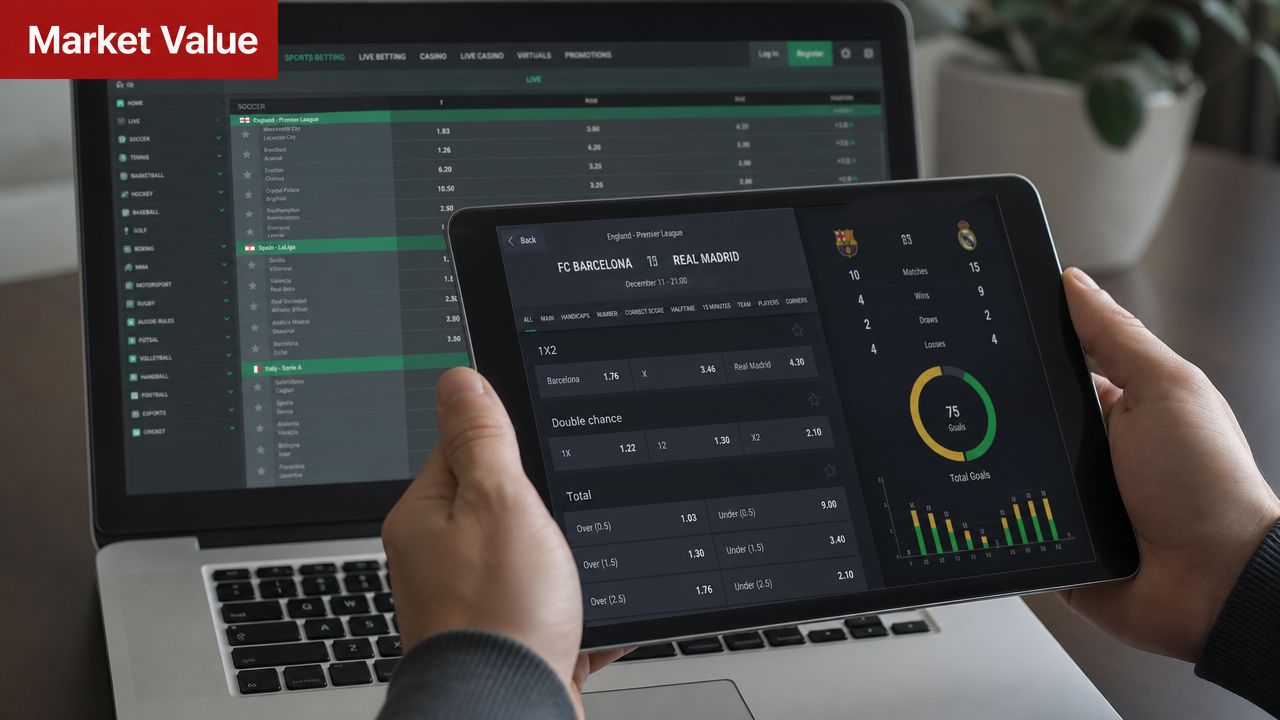
A sportsbook line is not a prediction you're supposed to admire. It's a price you're supposed to test.
That distinction matters because many bettors still approach betting like a pick contest. They ask whether Team A is better than Team B. The better question is whether the line at MyBookie, BetUS, or BUSR misstates the actual chances enough to justify a wager.
The market is efficient, but not perfect
A peer-reviewed study on sports-betting decision-making found that point spreads captured 86% of the variability in the median outcome. It also found that, for standard spread bets, you must win more than 52.4% of the time to be profitable, and that profitable wagering depends on finding edges in a narrow zone where your projection differs from the market. That's the hard truth of betting. The line already knows a lot.
So where's the opportunity? In the small mistakes.
The same study concluded that a deviation of just one point from the true median can be enough to create positive expected profit in some cases. That means your goal isn't to uncover some hidden truth the market completely missed. Your goal is to find spots where the posted number is just wrong enough.
What value looks like in practice
If your handicap makes a game -4 and BetUS is hanging -2.5, that difference matters. If your projection makes a total 46 and Heritage Sports is dealing 43.5, that matters too. Small gaps are the game.
The mistake beginners make is betting when they “like” a side, even if their opinion and the market are basically the same. If your number lands right inside that thin decision zone the study identifies, you should usually pass. No edge, no bet.
Here's the framework:
- Make your number first
- Convert the betting price into implied probability
- Compare your estimate to the market's estimate
- Bet only when your edge is meaningful
- Skip coin-flip opinions dressed up as conviction
If your process can't explain why the number is wrong, you're probably just buying action.
For a practical companion on this idea, review this guide to betting for value.
Price beats narrative
Narratives can help you ask questions. They shouldn't place bets for you.
A revenge spot, travel fatigue angle, weather concern, or injury note matters only if the market hasn't already priced it in correctly. That's the discipline most bettors never develop. They think they're betting information when they're rather betting a story everyone else already knows.
Value is where your number and their number disagree enough to justify risk.
Developing Your Handicapping Process
A strong betting process produces opinions you can test. A weak process produces opinions you can defend. Those are not the same thing.
Most losing bettors don't have a real handicapping workflow. They scroll injury news, watch a few clips, notice a trend, and call that analysis. That approach feels active, but it doesn't create a repeatable edge on offshore books like Bookmaker.eu, BetAnything, or Cosmobet.
Start with your own number
Before you look at the board, define what you think the game should be. That can come from power ratings, matchup adjustments, situational notes, player availability, or a simpler personal model. The method can vary. The rule doesn't. You need a number before you compare against the market.
That matters even more at books that post early or move aggressively. If Bookmaker.eu hangs an opener and you don't know what fair price looks like, you have no way to judge whether the opener is soft, sharp, or untouchable.
Separate useful factors from noise
A lot of bettors get trapped by angles that sound smart but don't hold up. A detailed discussion of betting angles and validation makes the point clearly: a major challenge is separating a genuine edge from a misleading trend, and many popular angles fail when tested with large samples and back-testing.
That should change how you research.
Use this filter when evaluating any angle:
- Does it have a logical mechanism? “Team plays better on Tuesdays” is noise. “Offense suffers when a key ball-handler is out” has a direct connection to performance.
- Can you test it over a large sample? If you only have a handful of games, don't confuse anecdote for evidence.
- Would the market already know this? Public information often gets priced quickly.
- Has the angle stayed stable? Some patterns work for a while and then disappear once books and bettors catch up.
Good handicapping asks, “Why should this matter, and why hasn't the market fully adjusted?”
A practical build for offshore betting
A workable process usually combines three layers.
First, set a baseline rating for teams or players. Second, adjust for context like injuries, travel, rest, pace, weather, or matchup style. Third, compare your final number against the best offshore lines available.
That process works across sports, but you have to keep records. If your totals outperform your sides, lean harder into totals. If your player props at Xbet or BUSR rely too much on narrative, cut them back until the data supports them.
A simple weekly review helps:
- List your bets by market type
- Note why you made each wager
- Flag angles that relied on trend talk
- Review whether closing movement agreed with you
- Keep only what survives repeated testing
Handicapping gets better when you stop trying to sound sharp and start trying to be measurable.
The Unbeatable Edge of Line Shopping
If you bet at only one sportsbook, you're donating value. It's that simple.
The easiest way to improve your long-term betting results is to hold accounts at multiple offshore books and compare prices every time. MyBookie, BetUS, Heritage Sports, Bookmaker.eu, and Bet105 won't always deal the same side, total, or moneyline. Those differences decide whether a bet is worth making.

A beginner strategy guide from Establish The Run puts this plainly: line shopping and price sensitivity are core to professional betting workflows, and the difference between the best available number and a worse number can completely flip expected value.
Why this matters on offshore books
Offshore platforms often differ in how quickly they react, how aggressively they move, and where they shade lines. That creates opportunity for anyone willing to compare before clicking.
Examples of what to shop for:
- Spread differences: One book may show -3 while another shows -2.5.
- Total differences: A half-point around key scoring ranges can matter a lot.
- Moneyline pricing: Small price gaps can change whether a favorite or dog is playable.
- Prop variants: Limits and menu depth can differ widely across MyBookie, BetUS, and BUSR.
A lot of bettors focus only on bonus offers. Bonuses matter, but price matters more. A flashy promo won't fix a steady diet of bad numbers.
For a broader comparison workflow, this guide on sports betting odds comparison is a useful reference.
Build the habit, not the excuse
Here's the routine that works:
- Open your target market at several books.
- Record the best available number.
- Check whether your edge still exists at that best price.
- Bet only if the number clears your threshold.
- If the price is gone, move on.
That last part matters. Missing a number is frustrating. Chasing a worse number is expensive.
A short walkthrough can help if you're still training your eye to compare screens quickly:
The bettors who last aren't always the smartest handicappers. Very often, they're the ones who refuse to take a bad price.
Executing Bets and Live Market Tactics
Once you've built your number and found the best line, execution becomes the edge protector. Good analysis can still get ruined by sloppy timing, rushed entry, or betting after the market already corrected.
That's especially true in live betting and fast-moving pregame markets at Xbet, BUSR, BetAnything, and similar offshore books.

Pregame execution checklist
Use a simple final pass before every wager.
- Confirm the number: Make sure the current line still matches the edge you identified.
- Recheck injuries and status news: Late information can kill a good handicap.
- Verify stake size: Use the unit your plan calls for, not what your emotions want.
- Review the market screen: Another offshore book may still have a better number.
- Write the bet down: One line on why you made it keeps you accountable later.
This doesn't take long. It saves a lot of careless bets.
Live betting is about speed, not adrenaline
A strong article from Unabated on speed and stale numbers in betting markets highlights a modern edge: reacting to information before slower books update, with the focus shifting from picking winners to identifying when the live price is wrong in real time.
That's the right way to think about live betting. Not as entertainment. As a timing market.
Useful live spots include:
- Delayed injury adjustment: A player leaves, one book updates, another lags.
- Overreaction to a short burst: A fast scoring run can distort a total.
- Game-state mismatches: The live line reflects recent action more than the underlying matchup.
- News hitting unevenly: Some books react faster than others to lineup or status changes.
Live betting works best when you already know the matchup and are waiting for the market to offer a mistake.
If you follow betting communities for market timing ideas, curated resources can help you monitor sharper conversations. These Betforward channel insights are one example worth browsing for signal tracking and workflow ideas.
Don't turn live betting into impulse betting
The danger with live markets is obvious. They create constant action. Constant action looks like opportunity, but often it's just temptation.
Set rules before the game starts. Decide what kind of live move would interest you. Decide which books you trust for speed. Decide what counts as an overreaction. If you wait until the game is chaotic, you'll start inventing reasons to bet.
Live wagering rewards preparation. It punishes improvisation.
Track Analyze and Refine for Long-Term Profit
The bettors who improve are the bettors who track. Everyone else is guessing from memory.
Your record should include the sport, market, book, number, stake, closing line, and a short note on why you made the bet. That note matters. It tells you whether your wins came from a sound process or from noise that happened to cash.
What your bet log should tell you
Over time, patterns show up.
Maybe your totals are sharper than your sides. Maybe your early-week numbers at Bookmaker.eu are better than your game-day bets at MyBookie. Maybe your live wagers at Xbet are strong when tied to injury reactions, but weak when they come from momentum reads. That's the kind of information that improves a betting account.
Use your history to ask hard questions:
- Which markets fit my strengths
- Which books consistently give me better prices
- Which angles hold up under review
- Where do emotion and overbetting creep in
Responsible betting is part of the edge
Discipline isn't just about profit. It's also about control.
Take breaks when your judgment slips. Cut volume when you stop seeing the board clearly. Stick to the bankroll rules you set earlier. If betting starts to feel compulsive, your process is already broken no matter what your last few results say.
How to win sports bets over the long run comes down to a handful of habits done relentlessly well: build your number, validate your angle, shop the line, execute cleanly, and review without ego. The bettors who last don't chase certainty. They protect process.
If you're comparing offshore sportsbooks, odds screens, bonuses, and betting features in one place, USASportsbookList is a practical starting point for reviewing books, comparing options, and finding resources that support a sharper betting workflow.