When US bettors ask about the legal status of offshore sportsbooks, the answer isn’t a simple yes or no. The reality is, it’s a legal gray area. No federal law makes it a crime for you, as an individual, to place a wager online. Instead, the laws are squarely aimed at the companies running the betting sites and the banks moving the money.
Understanding the Legal Gray Area of Offshore Sportsbooks
For the average sports fan, the world of online betting can feel like a maze. You see popular offshore sportsbooks like MyBookie and BetUS openly welcoming American players. So, what’s the real story here?
It all comes down to a crucial distinction: it’s not about what’s legal for you to do, but what’s legal for these companies to operate on US soil.

Think of it like this: federal laws such as the Wire Act and the Unlawful Internet Gambling Enforcement Act (UIGEA) put up a financial fence around the country. Their goal is to stop gambling businesses from setting up shop within the US and to block payments tied to online betting.
But here’s the key—offshore sportsbooks like Bookmaker.eu and Heritage Sports are based outside the United States. They operate from countries with friendly regulations, which puts them beyond the direct reach of American law enforcement. This is exactly why they can continue to serve millions of bettors across the country.
The Focus Is on the Business, Not the Bettor
The most important thing to understand is who these laws actually target. Law enforcement has always prioritized going after the gambling organizations and their payment processors, not the individual players placing bets.
For an individual player, the practical risk of facing legal trouble for betting on sports with a site like Xbet or BUSR is essentially zero. To date, there has never been a single documented case of a US citizen being prosecuted for simply wagering on an offshore sportsbook.
This reality has allowed a massive, thriving market to exist. Even with more states legalizing sports betting, the offshore market is still king. An offshore market size study on Covers.com found that the unregulated offshore market is roughly twice the size of the legal one. The research also highlighted that many of the most popular betting brands in the US are offshore operators like MyBookie, BetUS, and Bookmaker.eu.
To get a clearer picture, let's break down the key federal statutes that shape this landscape. These laws are the foundation of why the "gray area" exists.
Key US Federal Gambling Laws at a Glance
This table simplifies the major federal laws that impact online sports betting and shows who they're really after.
| Federal Law | Year Enacted | Primary Target | Impact on Bettors |
|---|---|---|---|
| The Federal Wire Act | 1961 | Businesses accepting bets on sports across state lines | Indirect. Primarily targets operators, not individual bettors placing wagers. |
| The Professional and Amateur Sports Protection Act (PASPA) | 1992 | State governments | Overturned in 2018. Its repeal opened the door for states to legalize sports betting. |
| The Unlawful Internet Gambling Enforcement Act (UIGEA) | 2006 | Banks and financial institutions processing gambling transactions | Indirect. Makes depositing and withdrawing difficult, but does not criminalize betting. |
As you can see, the theme is consistent: the laws are designed to disrupt the business of gambling, not punish the players. This framework is precisely why the offshore market has become such a popular alternative for so many.
Why Offshore Remains a Popular Choice
This unique legal situation explains why countless bettors—even in states with regulated options—still turn to offshore platforms. Sites like Cosmobet, BetAnything, and Bet105 often deliver distinct advantages that keep players coming back for more.
- Better Odds and Lower Juice: Offshore books like Heritage Sports and Bookmaker.eu have to compete in a global market, which often leads to more favorable lines and smaller commissions (the "vig") for the house.
- Larger Bonuses: They're famous for offering bigger welcome bonuses and promotions, especially if you're using cryptocurrencies to fund your account at a site like BUSR.
- Greater Market Variety: You can find betting lines on a much wider range of international sports, political outcomes, and other unique prop bets that state-licensed sportsbooks simply don't touch.
This section just sets the stage. As we move forward, we'll dive deeper into these specific federal laws, look at the patchwork of state-by-state rules, and give you practical steps to bet safely.
How Federal Laws Like the Wire Act and UIGEA Shape Betting
To understand why offshore sportsbooks even exist, you have to look at two key federal laws. These old statutes, the Wire Act and UIGEA, aren't aimed at individual bettors like you. Instead, they put the squeeze on the businesses and banks that handle the money.
Let's start with the Wire Act. This law is a relic from 1961, originally passed to stop mob-run bookies from taking sports wagers over interstate phone lines. For years, lawyers argued about whether it applied to the internet. Today, the general agreement is that the Wire Act only targets businesses taking sports bets across state lines. It was never meant to go after some guy placing a bet on the weekend.
This is the loophole offshore sportsbooks live in. Since they are based outside of the United States, they operate beyond the direct reach of this federal law. The Wire Act’s focus has always been on penalizing the business of gambling, not the individual placing a wager.
UIGEA: A Banking Hurdle, Not a Betting Ban
The other big one is the Unlawful Internet Gambling Enforcement Act of 2006 (UIGEA). This is probably the most misunderstood law in all of US gambling. A lot of people think UIGEA made online betting illegal overnight. That's just not true.
UIGEA is all about banking. It doesn't actually make any form of gambling legal or illegal. What it does do is forbid US banks and payment processors from knowingly handling transactions for "unlawful internet gambling."
Here's the key: UIGEA makes it a crime to accept payments for illegal online bets. The heat is on the financial system, not the player. It created a major roadblock for moving money around but did not make it a federal crime for you to place a bet.
This banking blockade changed everything. Suddenly, using your Visa or a simple bank wire to fund an offshore account became a hit-or-miss proposition. In response, savvy sportsbooks like Bookmaker.eu and Heritage Sports had to get creative and started looking for new payment solutions.
The Rise of Crypto in Offshore Betting
Those banking headaches from UIGEA are the single biggest reason crypto became king in the offshore world. Bitcoin and other digital currencies don't run through the traditional banking system, making them the perfect workaround for UIGEA’s restrictions.
For bettors, using crypto at sites like MyBookie or BetUS just makes sense. The advantages are clear:
- Speed: Deposits are almost instant. Payouts that used to take days or weeks can now be in your wallet within hours.
- Reliability: You don't have to worry about a US bank blocking your transaction. The money just goes where it's supposed to.
- Better Bonuses: Sportsbooks, including BUSR and Xbet, almost always offer bigger and better bonuses for crypto deposits.
This whole shift was born from necessity. The government created a financial problem, and the industry found a technological solution. This dynamic has completely reshaped offshore betting, making crypto the go-to method for easy and reliable transactions.
When the Supreme Court struck down PASPA back in 2018, it didn't magically create a single, unified sports betting market across the US. Instead, it tossed the keys to each individual state, and what we got was a classic American patchwork of laws.
This means what’s perfectly legal in one state can be completely different just a few miles away. For bettors, this fractured map boils down to three distinct situations, and knowing which one applies to your state is key to understanding where offshore sportsbooks fit in.
The Three Types of Betting States
At the end of the day, all 50 states fall into one of three buckets when it comes to sports wagering.
- States with Regulated Markets: These states have built their own legal, state-licensed online sports betting industries.
- States Where Offshore Is the Only Option: This covers some of the biggest states in the country, like California and Texas, where there's no state-regulated online betting. For folks there, offshore sportsbooks like Xbet and BUSR are the only game in town for betting online.
- States with Heavy Restrictions: This last group includes states that either ban online betting outright or have extremely limited options, like only allowing bets at a couple of retail locations.
Interestingly, even in states with a full menu of local, regulated options, many sharp bettors stick with offshore sites. The reasons are pretty straightforward: they often find better odds, a wider variety of betting markets, or creative prop bets you just won't see on the state-licensed apps. A player might use Cosmobet for its killer international soccer lines or jump on Bet105 for its competitive odds on niche sports.
For a complete rundown, you can learn more about legal sports betting states in our guide.
The chart below shows how federal laws like the Wire Act and UIGEA set the stage for this state-level environment. You'll notice they go after the businesses and the payment processors, not the players themselves.
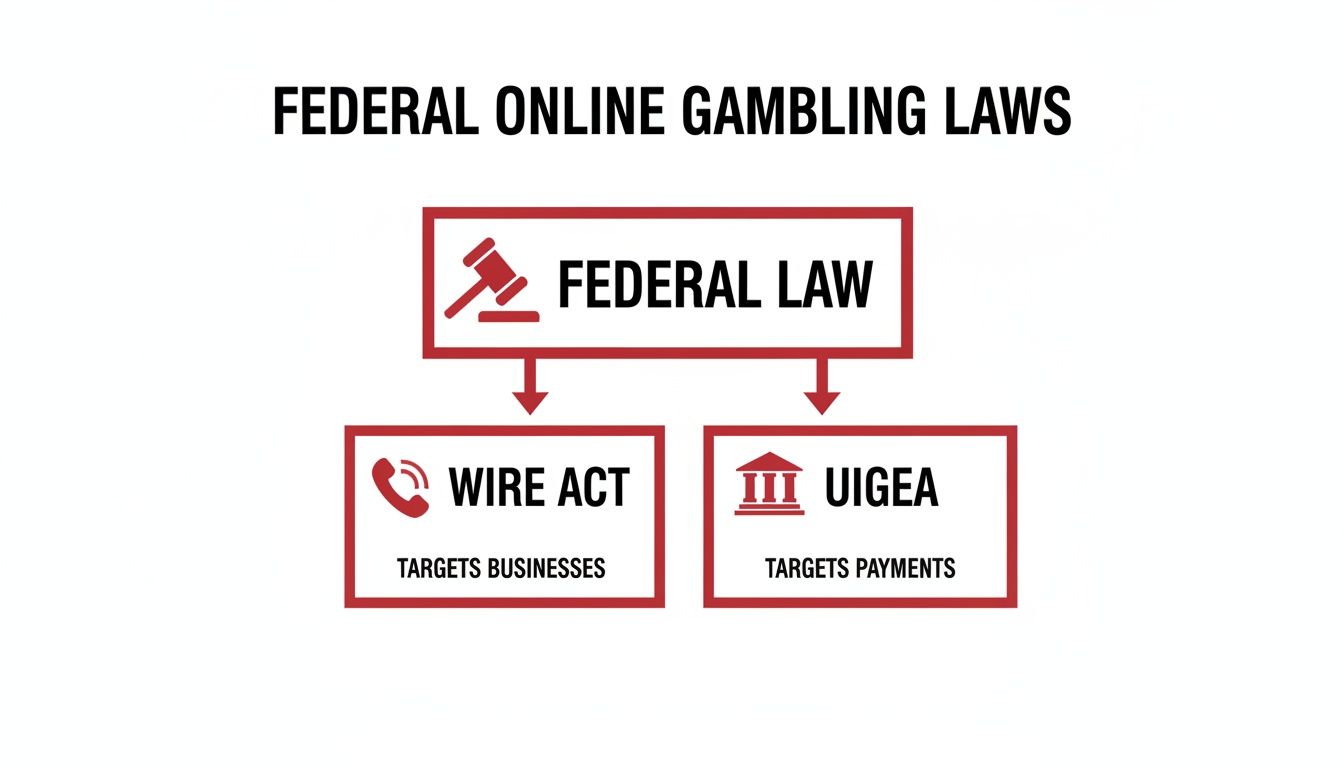
This setup is exactly why the state laws become the most important piece of the puzzle for individual bettors. Federal enforcement is aimed squarely at operators and banks.
The Real-World Risk for Individual Bettors
Despite the confusing mess of state laws, one thing has been remarkably consistent across the entire country: law enforcement targets the people running the books, not the people betting with them.
To date, no state has ever prosecuted an individual simply for placing a personal bet with an offshore sportsbook. All law enforcement resources are aimed at taking down large-scale illegal gambling rings and the operators behind them, not casual bettors using sites like MyBookie or BetUS.
This long and consistent track record tells you everything you need to know. While it’s smart to be aware of your state’s particular stance, the practical risk of you, the player, getting into any legal trouble is virtually zero.
This reality is precisely why millions of Americans feel confident using offshore sportsbooks every day. They can log into top-tier platforms like Bookmaker.eu and Heritage Sports without looking over their shoulder. These sites have been operating and paying out winners for decades, which goes a long way in building trust.
Ultimately, the combination of federal laws focused on businesses and the state-by-state system has created an environment where reputable offshore sites like BetAnything can thrive by offering a solid service, especially in states that still have no local options.
Why Bettors Prefer Offshore Sportsbooks
So, with a growing number of state-licensed apps, why would an American bettor still choose an offshore site like MyBookie or BetUS? It’s not just one single reason. Instead, it’s a powerful mix of better value, wider selection, and pure convenience that keeps experienced players coming back.
Offshore sportsbooks operate in a cutthroat global market. They have to fight for every single customer, and their main weapon is offering a better deal. This starts with the numbers that matter most: the odds.
Better Odds and Bigger Bonuses
One of the most consistent perks of betting offshore is finding more competitive odds and lower "juice" (or "vig"). This is the small commission a book takes for handling your bet. It might not seem like much, but shaving the juice from the standard -110 to -105 means you're keeping more of your own money on every winning ticket. Over time, that adds up in a big way, something sharp bettors know all too well.
Then there are the bonuses. Offshore books are famous for their massive welcome packages and crypto promotions that simply dwarf domestic offers. It’s not uncommon to see a 50% or 100% match on your first deposit, often giving you up to $1,000 or more in extra betting cash.
For years, sites like BUSR and Bookmaker.eu have built their entire brand on rewarding players, especially those using crypto. By offering fat bonuses for Bitcoin deposits, they sidestep clunky banking regulations and pass those savings directly on to you.
Unmatched Market Variety and Depth
Another huge draw is the sheer menu of betting options. While state-licensed platforms can be surprisingly restrictive, offshore operators open up a world of possibilities.
- International Sports: You can bet on everything from second-tier European soccer leagues to international cricket and global motorsports—far beyond the major US pro leagues.
- Unique Prop Bets: This is where offshore sites like Cosmobet and Bet105 really shine. They get creative, offering wagers on political outcomes, entertainment awards, and wild player props you'll never find on a regulated app.
- Fewer Restrictions: Forget being blocked from betting on your local college team. Offshore books have no such rules, a massive plus for die-hard college sports fans who want to back their home-state schools.
Polished User Experience and All-in-One Hubs
Finally, let's talk about the experience itself. Top-tier offshore sites like Xbet and BetAnything have spent years refining their platforms. They’ve invested heavily in creating clean, fast, and mobile-friendly websites that just work.
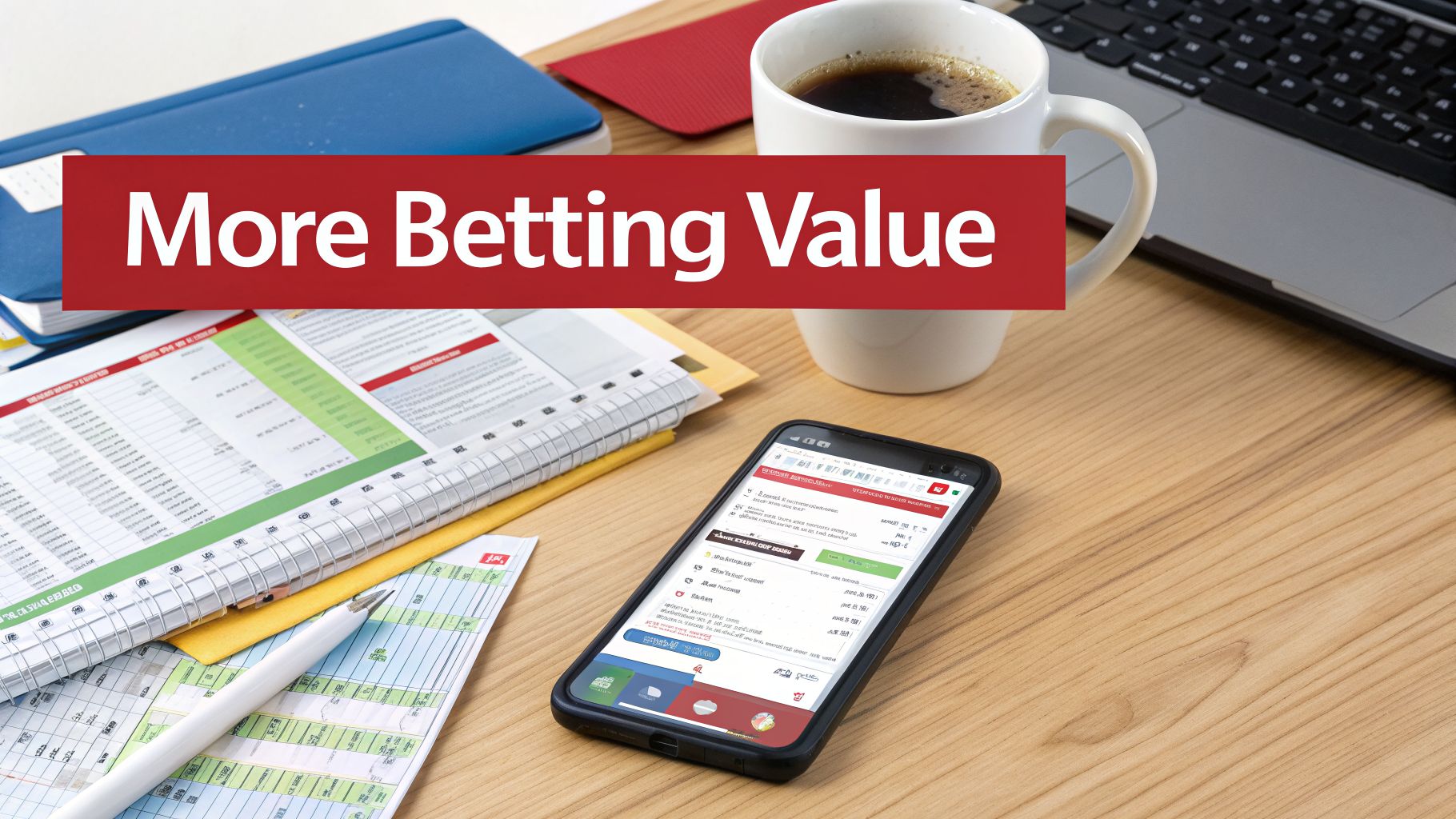
As you can see, the best sites make it incredibly easy to find live odds, jump between sports, and manage your account with just a few taps.
On top of that, many of these operators, including the highly-regarded Heritage Sports, function as true all-in-one hubs. They seamlessly combine a world-class sportsbook with a racebook for the ponies and a full-blown online casino. This lets you use a single account and one bankroll for all your action, offering a level of integrated convenience that's tough for anyone else to match.
Mastering Deposits and Withdrawals with Crypto
So, we've talked about how UIGEA complicated things. In practical terms, it created a massive headache for anyone trying to move money to and from an offshore sportsbook. Traditional methods like credit cards or bank wires became a game of hit-or-miss. This banking hurdle, however, forced the industry to get creative, and the solution that emerged completely changed the game.
Cryptocurrency, plain and simple, was the answer. Digital currencies like Bitcoin and Ethereum don't run through the traditional banking system, which means they aren't bogged down by the same red tape. This created a direct, clean, and incredibly fast lane for funding your account and—most importantly—cashing out your wins.
Why Crypto Is the Gold Standard for Offshore Betting
Using crypto at a top site like Bookmaker.eu or Heritage Sports brings a few key advantages that old-school methods just can't touch. The biggest win here is speed. Period. Crypto deposits are practically instant, and withdrawals that used to drag on for days or even weeks can now be in your personal wallet in a matter of hours.
But it’s not just about speed. Crypto adds a serious layer of privacy and security. You’re not handing over your credit card number or bank account details directly to the book. The transaction lives on the blockchain, keeping your sensitive financial info out of the picture. It's really no wonder so many experienced bettors have made it their default method.
The sportsbooks themselves are all-in on crypto. They actively encourage it because it saves them a fortune in processing fees. Operators like BUSR and MyBookie pass those savings directly to you with much bigger bonuses. You’ll almost always find more generous welcome offers and reload bonuses when you fund your account with crypto.
Choosing the right payment method is crucial for a smooth betting experience. Let's break down how the most common options stack up.
Comparing Payment Methods at Offshore Sportsbooks
This table gives you a quick side-by-side look at the deposit and withdrawal options you'll find at most offshore books, highlighting what makes each one tick.
| Payment Method | Typical Deposit Speed | Withdrawal Speed | Common Fees | Best For |
|---|---|---|---|---|
| Cryptocurrency | 5-30 Minutes | 1-48 Hours | Low (network fees) | Speed, privacy, and accessing the biggest bonuses. |
| Credit/Debit Card | Instant | Not Available | 3-9% processing fees | Quick, convenient first-time deposits. |
| Person-to-Person | 1-2 Business Days | 3-5 Business Days | Varies by amount | Larger transfers when cards or crypto aren't an option. |
| Bank Wire | 3-5 Business Days | 7-15 Business Days | High ($45+) | Very large, less frequent transactions. |
| Check by Courier | Not Available | 7-15 Business Days | High ($50+) | Traditionalists who prefer a physical payment. |
As you can see, crypto consistently comes out on top for both speed and low fees, which is why it has become the standard for savvy bettors. While cards are convenient for an initial deposit, you'll need another method for withdrawals, making crypto the most efficient all-around choice.
Your First Bitcoin Deposit: A Simple Walkthrough
If you're new to the world of crypto, your first deposit can feel a bit daunting. Don't worry, it's actually incredibly simple once you do it once. The best way to think about it is just like sending an email—you just need the right address. Quality sites like BetUS and Xbet have fantastic tutorials and support to walk you through it.
Here's the process in a nutshell:
- Get a Crypto Wallet: You'll need a "wallet" to hold your crypto. Think of it like a digital bank account. Coinbase and Exodus are popular, user-friendly options available as mobile apps.
- Buy Some Crypto: Use an exchange (many wallets have this built-in) to buy a cryptocurrency like Bitcoin. You can typically use your debit card or link a bank account.
- Start the Deposit: Log into your sportsbook, like BetAnything or Cosmobet, and head to the cashier or deposit section. Select Bitcoin (or your chosen crypto).
- Copy the Sportsbook's Address: The site will generate a long, unique string of characters. This is the "wallet address" for your deposit. Copy it carefully—it's like the account number for your transaction.
- Send the Crypto: Go back to your own crypto wallet, select "Send," and paste the sportsbook's address into the recipient field. Enter the amount you want to deposit, confirm, and you're done. The funds usually land in your betting account within minutes.
Using crypto is now the industry standard for a reason. It solves the payment issues created by US law, giving you a fast, reliable, and secure way to manage your bankroll. Once you try it, you'll see why it's the preferred method for millions of US bettors.
For a closer look at the top operators in this space, check out our guide to the best offshore betting sites that accept Bitcoin. Whether you're playing at Bet105 or another leading book, going with crypto is the key to a hassle-free experience.
How to Bet Safely and Choose Trustworthy Offshore Sites
While the legal maze around offshore sportsbooks keeps the heat on the operators, your biggest concern as a bettor is much more straightforward: getting paid. The real risk isn't the law knocking on your door; it's sending your hard-earned money to a shady site that vanishes when you hit a big win.
With no US regulator to complain to, the burden of vetting a sportsbook falls squarely on your shoulders. So, how do you tell the good guys from the fly-by-night operations? It all comes down to reputation. In a self-regulated industry, a sportsbook's name is its most valuable currency. A long history of fair play, on-time payouts, and solid customer service is the only thing that matters.
Vetting an Offshore Operator
Before you even think about depositing a single dollar, you’ve got to do your homework. A few quick checks upfront can save you a massive headache later. The first thing to look for is longevity. In this business, a long track record is one of the best signs of a trustworthy book.
Think about it: brands like Bookmaker.eu and Heritage Sports have been taking bets and paying winners for more than two decades. They’ve stuck around because they built a foundation of trust. A book that doesn't pay its players simply can't survive that long.
A sportsbook's reputation is built over years but can be torched in a single afternoon. The best operators know this. They prioritize reliable payouts and customer satisfaction because a good name is the only marketing that truly counts.
Beyond just how long they've been around, you need to dig into what other players are saying. Scour independent betting forums and Reddit communities for real-world feedback. This is where you'll find the unvarnished truth about a site's performance—payout speeds, confusing bonus terms, or how they handle a dispute. You’ll see names like BetUS and MyBookie pop up constantly, giving you a clear sense of what to expect.
The Trustworthy Sportsbook Checklist
As you size up a potential site, run it through this simple checklist. A quality operation should tick most, if not all, of these boxes.
- Established History: How long have they been in business? Operators with 5+ years under their belt, like BUSR, are generally a safer bet than a brand-new book.
- Positive User Reviews: What are other bettors saying? You're looking for consistent praise for fast withdrawals and fair grading.
- Responsive Customer Service: Test them. A good site offers 24/7 support through live chat, phone, and email, with agents who actually know what they're talking about.
- Secure and Modern Website: Does the site use SSL encryption (the little lock icon)? Is the platform easy to use on your phone? Sites like Xbet and BetAnything have invested in clean, modern interfaces.
- Clear Bonus Terms: Are the bonus rules and rollover requirements laid out in plain English? Reputable books are upfront about their promotions.
Securing Your Account and Betting Responsibly
Once you’ve found a book you can trust, the next job is to protect your own account. Treat your sportsbook login like your online banking password—because that's essentially what it is. Use a strong, unique password and turn on two-factor authentication (2FA) if it’s available. And never, ever share your login details.
Finally, always bet responsibly. Set a firm budget and stick to it, no matter what. Never chase your losses or bet with money you can't afford to part with. The best sportsbooks, including Cosmobet and Bet105, offer tools that let you set deposit limits or even self-exclude if you need to take a break.
The whole point is to have fun and add a little extra excitement to the games you love. By picking a proven operator and managing your bankroll smartly, you can navigate the offshore market with confidence. To go even deeper, you can learn more about the safest offshore betting sites in our dedicated guide.
Frequently Asked Questions About Offshore Betting
Jumping into the world of offshore betting naturally brings up some big questions. We get it. To cut through the noise, we've put together straight answers for the most common things bettors want to know about using offshore sportsbooks.
Has a US Citizen Ever Been Prosecuted for Using an Offshore Sportsbook?
The short answer is no. There isn't a single known case of a regular US citizen being arrested, fined, or prosecuted just for placing their own bets on an offshore site.
Law enforcement focuses its firepower on the businesses themselves and the big-money payment processors, not on individual players using sites like MyBookie or BetUS.
Are My Winnings from Sites Like Bookmaker.eu Taxable?
Absolutely. The IRS considers any and all income to be reportable, and that definitely includes your gambling winnings, no matter where they come from.
A site like Bookmaker.eu won't send you a W-2G form like a licensed US-based operator will. That means the responsibility is entirely on you to track and report your net winnings. When in doubt, it’s always smart to talk to a tax pro to make sure you're handling everything correctly.
Why Can I Use Offshore Sites in a State with Legal Betting?
Offshore sportsbooks like BetAnything or Xbet are based outside of US legal jurisdiction, so they don't typically block players based on what state they're in. This is a huge reason why even sharp bettors in regulated states stick with them.
Simply put, they often find much better odds, bigger crypto bonuses, and a far wider menu of betting markets than what their local, state-licensed books are offering.
The key takeaway is that offshore sites compete on a global scale. This competition drives them to offer superior value in the form of better lines, bigger promotions, and more betting options, which is a major advantage for any bettor, regardless of their state's laws.
What Is the Safest Way to Fund My Offshore Account?
By a long shot, cryptocurrency is the safest, fastest, and most dependable way to handle your deposits and withdrawals.
Using currencies like Bitcoin lets you sidestep the banking headaches caused by the UIGEA. This means your deposits are nearly instant, and your payouts can be in your wallet within a few hours.
Top-tier sportsbooks like BUSR, Heritage Sports, Bet105, and Cosmobet all push for crypto use. They frequently offer their own step-by-step guides and provide exclusive, boosted bonuses for players who deposit with crypto, making it the clear best choice for managing your bankroll.
At USASportsbookList, we're dedicated to helping you find the best and most trustworthy sportsbooks for US players. Our expert reviews and in-depth guides are designed to give you all the information you need to bet with confidence. Explore our curated list of top-rated sportsbooks and find your perfect match today!