BetUS
A dangerous-looking attempt does not always become a shot on goal.
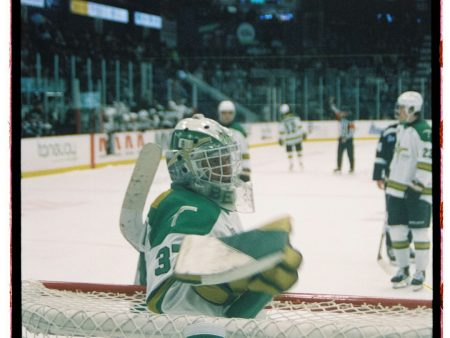
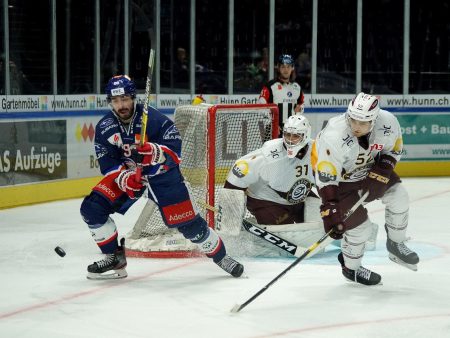
A winger fires through traffic. The goalie drops into a butterfly, the crowd reacts, and the shot counter never moves. A defender may have blocked the puck before it reached the net, or it may have gone wide despite the goalie’s reaction.
For a shots-on-goal prop, the recorded statistic matters more than how the play looked. A save or goal generally counts; an attempt that misses or is blocked does not. The live counter can also change if the official game log is corrected, so the number on screen during play is not necessarily the final total. Settlement follows the sportsbook’s rules for the recorded stat.
The net-bound test
A shot on goal is an attacking attempt that either enters the net or would have entered if the goaltender had not stopped it. The question is where the puck was headed, not how hard it was hit or how dramatic the goalie’s movement looked. A soft puck sliding toward an open portion of the net can qualify; a hard slap shot sailing outside the posts cannot.
Goals and saves are two outcomes of that same test. If a player shoots and scores, the attempt adds one shot on goal to that player’s total. If the goalie catches the puck, kicks it away, or steers it into the corner, the attempt still adds one—provided it was headed into the net.
Top Sportsbooks for November 2026
BetUS

BetNow

MyBookie

Bet105

BUSR Sports

Everygame Sports

BetOnline

BetWhale

BetAnything

Xbet

Bovada

Bookmaker
A goalie touching the puck is not, by itself, proof of a shot on goal. The goalie might reach out to stop a puck that was going wide; that play does not meet the net-bound test. For a player shot prop, the relevant number is the player’s credited shots, including scoring shots, not just the saves made against that player. It is a useful distinction when placing and understanding hockey bets.
Blocks, misses, and posts
A shot attempt is not necessarily a shot on goal. The distinction matters for skater props: an attempt can show up in play-by-play without adding to the shooter’s shots-on-goal total.
| Play | Ruling | Why |
|---|---|---|
| A skater blocks the puck before it reaches the goalie | No shot on goal | The attempt is recorded as blocked, not as a goalie save. |
| The puck misses the net | No shot on goal | A wide or high attempt does not require a save. |
| The puck hits the post or crossbar and stays out | No shot on goal | The attempt is recorded as a miss, even if it came close. |
| The puck hits the post or crossbar and goes in | Goal and shot on goal | A goal adds one shot to the scorer’s total. |
Shot attempts are the broader measure: they include shots on goal, blocked attempts, and misses. That makes a player’s attempt count a poor substitute for a shots-on-goal prop. A shooter could take three attempts—one saved, one blocked, and one off the post—and finish with just one shot on goal.
For a close call, the useful question is what happened after the puck left the stick. A loud clang off the crossbar may look more convincing than a routine goalie save, but only the save adds a shot on goal when the puck stays out.
Who gets credit for the shot?
A puck reaching the goalie may count as a team shot, but a player prop depends on which skater receives credit. The last player to make an attacking play on the puck is often the key distinction.
- Attacking tip: If a teammate redirects a shot on goal, the tipper can receive the shot credit rather than the player who fired the puck. A single attempt does not give both attackers a shot.
- Defender deflection: A puck glancing off a defending skater generally remains credited to the attacking shooter if it becomes a shot on goal. The defender does not collect a shot for accidentally changing its path.
- Rebound attempt: A goalie save followed by a fresh attempt from the rebound can produce two shots on goal. The first belongs to the initial shooter; the second belongs to whoever takes the rebound shot, even if that is the same player.
Tips can be hard to spot in real time. A stick may barely touch the puck, and broadcast angles may not show whether contact changed its direction. The official scorer’s attribution controls the recorded player total, so a live prop count can shift after a close play is reviewed. When a disputed tip matters, the official play-by-play is more useful than counting visible goalie saves from the broadcast.
When goalie contact doesn’t mean a shot
A goalie can touch the puck without giving anyone a shot on goal. The deciding question remains whether an attacking attempt was headed into the net—or went in.
- A puck headed wide: A goalie reaches out and catches a shot that was passing outside the post. The contact may look like a save, but the attempt is a miss if it would not have entered the net.
- A loose puck frozen: A goalie covers a puck sitting in the crease before an attacker shoots it. The whistle stops play, but no shot on goal has occurred.
- An attempt disrupted early: A goalie poke-checks the puck away as an attacker approaches, before the attacker gets a shot off. That defensive play does not create a shot for the attacker.
The empty-net case shows why goalie contact is not part of the definition. A shot that goes into an empty net counts as both a goal and a shot on goal. One that slides past the empty net is a missed attempt, even if it came close. For props, the visible outcome matters less than the official ruling on whether a shot was net-bound or became a goal.
Overtime shots and shootout attempts
A player’s official game total includes shots on goal recorded in overtime. Shootout attempts do not add to that total, even when the shooter scores. The shootout breaks a tie; it is not treated as another stretch of play for individual shot statistics.
Suppose a player has two shots on goal through three periods and takes one more in overtime. The official game total is three, but a regulation-only shots prop may settle at two. A third-period prop would also stop at the end of that period, rather than picking up an overtime shot.
The key is the market’s stated time frame, not just the final number beside the player’s name. Before comparing a box score with a settled prop, check whether the bet covers the full game, regulation, or one period, and read the sportsbook’s settlement rules if the label is unclear. A similar distinction applies to whether shootout goals affect betting totals.
How a shot prop settles
A shots-on-goal prop settles against the credited total used by the sportsbook, not the number of attempts a viewer remembers seeing. If a player finishes with three shots, over 2.5 wins and under 2.5 loses. A blocked attempt late in the game cannot turn that three into a four, even if it looked close to reaching the net.
Whole-number lines leave room for a different result. On a line of 3 shots, a final total of four wins the over, two wins the under, and exactly three is typically a push: the stake is returned. House rules can differ, so the market terms control how a tie is handled.
Before placing or checking a bet, the useful questions are:
- Which time frame applies? Official game totals include overtime shots, but a regulation-only market may stop after three periods. Shootout attempts do not add to a player’s shot total.
- What counts as participation? A player scratched before the game may trigger a void; a player who takes one shift and leaves injured may still have an active prop. The minimum-participation rule, if any, is set by the book.
- Which total is authoritative? A broadcast graphic or live app can lag behind a scoring correction. Check the designated statistics source and the book’s policy on corrections made after settlement.
Rules are worth reading even when the shot count looks straightforward. The sportsbooks for NHL player props may offer similar-looking lines while applying different void and settlement policies.
Why live shot totals change
A shot counter on a broadcast is a useful live reference, but it is not necessarily the final number used to settle a prop. The arena display, broadcast graphic, NHL app, and sportsbook may update at different times or draw from feeds with different delays. For a few minutes, they can show different totals for the same player.
Credit can change after a closer look at a play. A puck initially recorded as a shot might be changed to a blocked attempt if a defender touched it before it reached the goalie. A save credited to one shooter might instead belong to a teammate whose tip redirected the puck. That can move a player from three shots to two without any new play occurring.
For a disputed prop, the most useful sequence is:
- Check the official NHL game log for the play and any change to its recorded type or shooter.
- Check the player box score for the resulting shot total. The play-by-play explains what changed; the box score shows where the player stands.
- Compare the sportsbook’s grading rules and settled result. Confirm which stats source and time frame the book uses, and whether its rules address later corrections.
A screenshot of a live counter helps document what was displayed, but it may not establish the settlement number. If the official total and the book’s settled result still conflict under its stated rules, those records give support a specific play and figure to review.
Four checks before counting a shot
-
Check the puck’s path
Was it headed into the net? A miss or a post that stays out is not a shot on goal.
-
Identify who stopped it
A goalie save counts; a skater’s block does not, even if the goalie reacts.
-
Check the credited player
A tip can change which attacker gets the shot. Use the official player total when attribution is unclear.
-
Check the covered period
Confirm whether the prop includes overtime and which stats source the sportsbook uses. Shootout attempts do not count toward the official game total.
A replay can explain a disputed attempt, but the credited total and the market rules decide the prop. That distinction also matters when building NHL same-game parlays: an attempt that looks close does not add a shot unless it is officially credited.
Top Sportsbooks for November 2026
BetUS
BetNow
MyBookie
Bet105
BUSR Sports
Everygame Sports
BetOnline
BetWhale
BetAnything
Xbet
Bovada